

International buyers seeking authentic products from Thailand face a critical decision: selecting the right thai products supplier to partner with for long-term success. Thailand's reputation as a manufacturing and export hub continues to strengthen in 2026, with the country offering an exceptional range of products from food ingredients and wellness items to personal care and agricultural goods. Understanding how to identify, vet, and collaborate with Thai suppliers can transform your import operations and give your business a competitive edge in increasingly demanding markets.
Understanding the Thai Products Supply Landscape
Thailand has positioned itself as a premier sourcing destination for international buyers, distributors, and retailers. The country's export infrastructure supports seamless transactions across multiple product categories, backed by government initiatives and decades of manufacturing expertise.
Major Product Categories from Thai Suppliers
When working with a thai products supplier, buyers typically focus on several high-demand categories:
- Food and beverage products including rice, sauces, seasonings, snacks, and ready-to-eat meals
- Herbal and wellness products such as traditional Thai balms, massage oils, and therapeutic items
- Coconut-based products ranging from virgin coconut oil to coconut water and dried coconut
- Personal care and beauty items featuring natural ingredients and traditional formulations
- Agricultural products including fresh produce, dried fruits, and processed agricultural goods
Thailand's Department of International Trade Promotion maintains comprehensive directories of certified exporters, offering international buyers a starting point for supplier discovery. These official channels provide additional security when entering new supplier relationships.

The diversity of available products means buyers can often consolidate multiple product lines through a single thai products supplier, reducing logistics complexity and shipping costs. This consolidation advantage becomes particularly valuable for retailers and distributors managing diverse product portfolios.
Vetting and Selecting Your Thai Products Supplier
Due diligence separates successful long-term partnerships from costly mistakes. International buyers must evaluate potential Thai suppliers across multiple dimensions before committing to purchase agreements.
Essential Verification Steps
| Verification Area | Key Questions | Documentation Required |
|---|---|---|
| Business Registration | Is the supplier legally registered? | Company registration certificate, tax ID |
| Export License | Do they hold proper export permits? | Export license, customs clearance history |
| Quality Certifications | What quality standards do they meet? | ISO, GMP, HACCP, or industry-specific certs |
| Financial Stability | Can they fulfill large orders consistently? | Bank references, trade references |
| Production Capacity | What are their minimum and maximum order quantities? | Factory audit reports, capacity statements |
Requesting sample products before placing bulk orders remains a non-negotiable step. Quality assessment through physical samples reveals manufacturing standards, packaging integrity, and whether products meet your market's expectations.
Red Flags to Watch For
Experienced importers recognize warning signs early in the supplier evaluation process:
- Reluctance to provide verifiable business documentation
- Unusually low pricing that seems disconnected from market reality
- Inability to arrange factory visits or video tours
- Poor communication responsiveness or unclear English capabilities
- No references from existing international clients
The Thai Food and Drug Administration provides regulatory guidance for products requiring health and safety certifications, helping buyers understand compliance requirements before committing to supplier relationships.
Navigating Export Documentation and Compliance
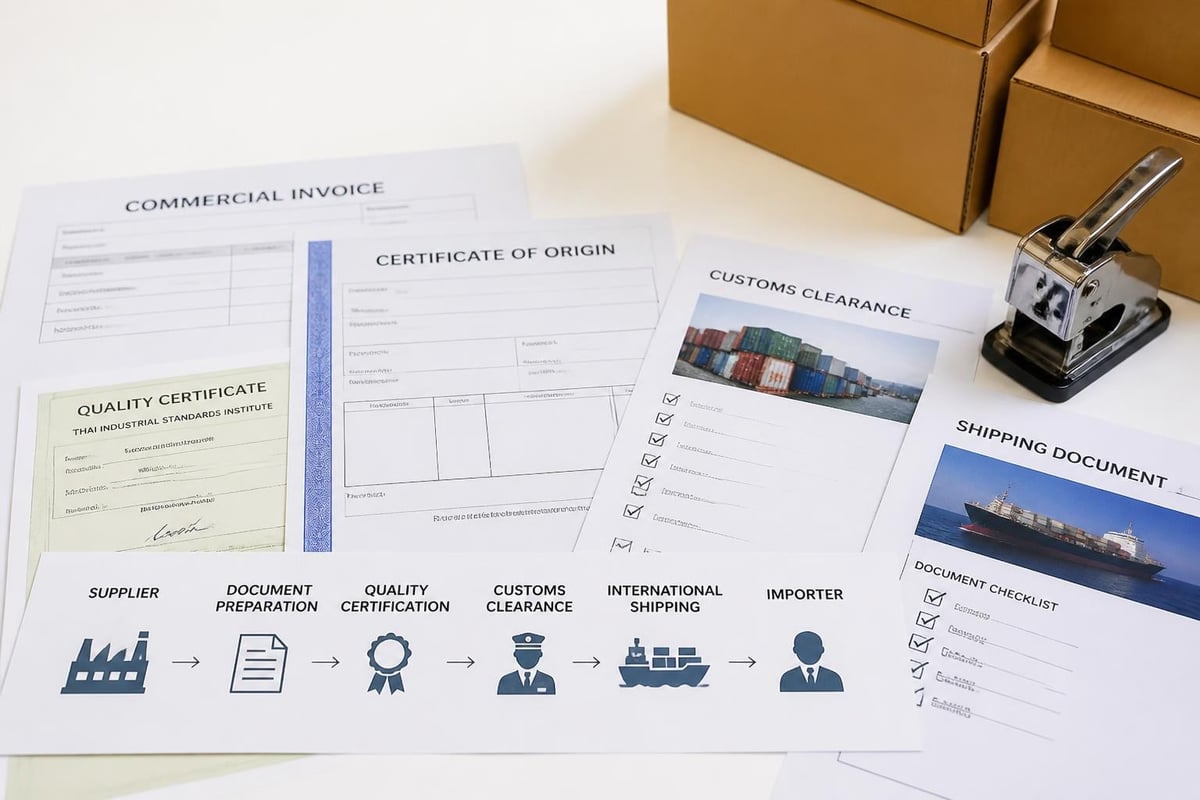
Successful importation requires understanding the documentation workflow between Thai suppliers and destination countries. A professional thai products supplier should demonstrate expertise in export procedures and support buyers through customs processes.
Core Export Documents
Every international shipment from Thailand requires specific paperwork:
- Commercial Invoice detailing product descriptions, quantities, unit prices, and total value
- Packing List specifying how goods are packaged, box dimensions, and weights
- Certificate of Origin proving Thai manufacture (often required for preferential tariffs)
- Bill of Lading or Airway Bill serving as the shipment contract and receipt
- Product-Specific Certificates such as health certificates for food items or phytosanitary certificates for agricultural products
For businesses sourcing Thai health and wellness products, additional documentation may include ingredient declarations, safety data sheets, and regulatory compliance certificates specific to herbal or traditional medicine products.
Thailand's customs infrastructure has modernized significantly, with the Thai Customs Department reporting streamlined processes that reduce clearance times. This efficiency benefits international buyers working with experienced Thai suppliers who understand documentation requirements thoroughly.
Logistics and Shipping Considerations
Transportation from Thailand to international destinations involves strategic decisions about shipping methods, routes, and consolidation options. Your choice of thai products supplier should include consideration of their logistics capabilities and partnerships.
Shipping Methods Comparison
Different product types and order volumes suit different transportation approaches:
| Method | Best For | Typical Transit Time | Cost Level |
|---|---|---|---|
| Sea Freight (FCL) | Large volumes, non-perishable goods | 20-45 days | Low per unit |
| Sea Freight (LCL) | Smaller volumes, mixed containers | 25-50 days | Moderate |
| Air Freight | High-value, time-sensitive, perishable items | 3-7 days | High |
| Express Courier | Samples, urgent small shipments | 2-5 days | Very high |
Thailand's major ports, particularly Laem Chabang, handle substantial container volumes according to Thai government logistics data, ensuring regular sailing schedules to major global destinations. This infrastructure reliability translates to predictable delivery timelines for importers.
Working with suppliers who understand Incoterms (International Commercial Terms) prevents misunderstandings about responsibility for shipping costs, insurance, and risk transfer. Common terms like FOB (Free on Board) and CIF (Cost, Insurance, and Freight) define exactly where the supplier's obligations end and the buyer's begin.
Quality Assurance and Product Standards
Maintaining consistent product quality across shipments requires systematic quality control processes. Professional Thai suppliers implement quality assurance at multiple production stages.
Quality Control Framework
- Raw material inspection before production begins
- In-process quality checks during manufacturing
- Final product inspection before packaging
- Pre-shipment verification confirming order accuracy
- Third-party testing when required by destination markets
For agricultural products, Thailand's Good Agricultural Practice (GAP) certification program provides standardized quality benchmarks. Buyers seeking agricultural items should prioritize suppliers with GAP certification or equivalent quality systems.
Quality expectations vary by market. Products destined for European markets face different regulatory requirements than those heading to Asian or North American destinations. A knowledgeable thai products supplier tailors quality control processes to match destination market requirements.
Pricing Structures and Payment Terms
Understanding Thai supplier pricing models helps buyers negotiate effectively and manage cash flow. Pricing transparency builds trust in long-term supplier relationships.
Typical Pricing Components
Thai product pricing generally includes:
- Ex-factory price (the base product cost)
- Domestic transportation to the port or airport
- Export packaging if different from standard packaging
- Documentation fees for certificates and permits
- Port handling charges before vessel loading
Volume discounts typically apply at specific breakpoints. A supplier might offer one price for 1,000 units, a lower price for 5,000 units, and an even better rate for 10,000+ units. Understanding these tiers helps buyers plan order quantities strategically.
Common Payment Methods
| Payment Term | Buyer Risk | Supplier Risk | When Typically Used |
|---|---|---|---|
| 100% Advance | High | Very Low | New suppliers, small orders |
| 30% Deposit, 70% Before Shipment | Moderate | Low | Established relationships |
| Letter of Credit (LC) | Low | Low | Large orders, new relationships |
| 30-60 Day Payment Terms | Low | High | Long-standing trusted partners |
Letters of credit through banks provide security for both parties, though they add cost and require precise documentation. Many importers use LCs when establishing relationships with a new thai products supplier before transitioning to more flexible terms after trust develops.
Building Long-Term Supplier Relationships
Successful importers view Thai suppliers as strategic partners rather than transactional vendors. This mindset shift creates mutual benefits and competitive advantages.

Relationship-Building Strategies
Strong supplier relationships develop through consistent practices:
- Regular communication beyond just placing orders
- Visiting Thailand to meet suppliers face-to-face and tour facilities
- Providing market feedback about product performance and customer preferences
- Planning ahead with forecasts that help suppliers manage production
- Paying on time to build financial trust and goodwill
Many successful importers work with their Thai suppliers on product customization, creating unique formulations or packaging that differentiate their market offerings. This collaborative approach transforms commodity products into branded assets.
The Thailand Board of Investment offers incentives to manufacturers serving international markets, meaning your supplier may be able to access benefits that ultimately improve your pricing or capabilities.
Sourcing Services and Product Development
Beyond supplying existing products, advanced Thai suppliers offer sourcing and product development services. These value-added capabilities help international buyers enter markets faster with differentiated offerings.
Custom Product Development Process
Working with a thai products supplier on custom products typically follows these stages:
- Concept discussion defining product specifications and target market requirements
- Formulation development creating initial product versions
- Sample production providing physical samples for testing
- Refinement cycles adjusting formulations based on feedback
- Production scaling moving from samples to commercial quantities
- Quality standardization establishing consistent manufacturing processes
Thailand's manufacturing ecosystem supports this development approach particularly well for natural products, herbal formulations, and food items where traditional knowledge combines with modern production capabilities.
Regulatory Compliance and Ethical Sourcing
International buyers increasingly face scrutiny about supply chain ethics and labor practices. Responsible sourcing starts with supplier selection and verification.
Ethical Sourcing Considerations
- Labor standards compliance with fair wage and working condition requirements
- Environmental practices including waste management and resource conservation
- Supply chain transparency knowing the origin of raw materials
- Child labor prevention systems ensuring age-appropriate employment
- Worker safety programs protecting employee health
The International Labour Organization's Thailand resources provide frameworks for assessing labor standards in Thai supply chains. Buyers serving markets with strict ethical sourcing requirements should verify supplier practices against these international benchmarks.
Certifications like Fair Trade, Organic, or Rainforest Alliance provide third-party verification of ethical practices. When these certifications matter to your end customers, prioritize Thai suppliers who maintain them.
Market-Specific Requirements
Different destination markets impose unique requirements on imported Thai products. A professional thai products supplier understands these variations and supports compliance.
Regional Requirement Variations
European Union Markets
- REACH compliance for chemical substances
- Novel food regulations for certain ingredients
- Organic certification from EU-approved bodies
- Detailed allergen labeling requirements
United States Markets
- FDA registration for food facilities
- Proposition 65 compliance for California sales
- USDA organic certification for organic claims
- Specific labeling format requirements
Middle Eastern Markets
- Halal certification from recognized authorities
- Arabic language labeling requirements
- Country-of-origin documentation
- Import license verification
Asian Markets
- Market-specific food safety standards
- Language-specific packaging requirements
- Varied certification recognition systems
- Import quota considerations
Buyers must communicate destination market requirements clearly to their Thai suppliers during initial discussions. Misunderstandings about regulatory requirements cause shipment delays and additional costs.
Digital Tools and Communication Platforms
Modern B2B sourcing leverages digital platforms for efficiency and transparency. Successful partnerships between buyers and Thai suppliers increasingly rely on technology.
Essential Digital Communication Tools
- Video conferencing for virtual factory tours and product presentations
- Cloud-based documentation sharing for order specifications and quality reports
- Instant messaging platforms for quick questions and updates
- Project management systems tracking order progress and shipment status
- Digital payment platforms enabling secure international transactions
Many Thai suppliers now maintain professional English-language websites and social media presence, making initial research and contact easier than in previous years. However, personal relationships remain central to Thai business culture, so digital tools should complement rather than replace direct human interaction.
Risk Management and Business Continuity
International sourcing involves inherent risks. Strategic buyers develop risk mitigation strategies and backup plans.
Key Risk Categories
| Risk Type | Mitigation Strategy |
|---|---|
| Quality Variations | Regular inspections, third-party testing, clear specifications |
| Supply Disruptions | Multiple supplier relationships, safety stock policies |
| Currency Fluctuations | Forward contracts, pricing agreements with adjustment clauses |
| Shipping Delays | Buffer time in planning, alternative routing options |
| Regulatory Changes | Monitoring trade policy, diversified market strategy |
Some importers maintain relationships with multiple Thai suppliers for critical product categories, ensuring continuity even if one supplier faces production issues. This approach requires more management effort but provides valuable insurance against disruption.
Scaling Your Thai Product Imports
As import operations grow, buyers need suppliers who can scale alongside them. Evaluating growth capacity during supplier selection prevents future constraints.
Growth Capacity Indicators
- Production facility size and equipment capacity
- Current utilization rates indicating room for expansion
- Access to raw materials without supply limitations
- Financial resources to invest in increased production
- Workforce flexibility to add shifts or hire additional staff
Transparent conversations about growth plans help both parties prepare appropriately. A thai products supplier appreciating your growth trajectory can invest in capacity expansion, secure raw material contracts, and allocate resources to support your increasing volumes.
Selecting the right Thai products supplier requires thorough evaluation of capabilities, quality systems, compliance knowledge, and partnership potential. Success comes from viewing suppliers as strategic partners who contribute to your competitive advantage, not merely as vendors fulfilling orders. BUARADA serves international wholesalers, distributors, retailers, and importers seeking reliable access to authentic Thai products, from food ingredients and coconut derivatives to wellness items and personal care products. Contact us to discuss your sourcing requirements and discover how our Thailand-based export expertise can support your business growth in 2026 and beyond.