

Thailand has emerged as a leading cosmetics manufacturing and export hub in Southeast Asia, offering international buyers access to high-quality beauty products at competitive wholesale prices. The thai cosmetics wholesale market encompasses everything from traditional herbal formulations to modern skincare innovations, making Thailand an attractive sourcing destination for importers, distributors, and retailers worldwide. Whether you're a seasoned wholesaler or exploring Thailand as a new supply base, understanding the regulatory framework, supplier landscape, and market dynamics is essential for building a successful import business.
Why Source From the Thai Cosmetics Wholesale Market
Thailand's cosmetics industry has experienced remarkable growth over the past decade, driven by government support, innovation in natural ingredients, and strong manufacturing infrastructure. The country exported over $2 billion worth of cosmetics products in recent years, with exports continuing to expand into markets across Asia, Europe, North America, and the Middle East.
Several competitive advantages make Thailand an ideal sourcing location for wholesale cosmetics:
- Natural ingredient expertise: Thai manufacturers excel at incorporating botanical extracts, herbs, and traditional ingredients into modern formulations
- Cost-effective manufacturing: Lower production costs compared to Western markets while maintaining quality standards
- ASEAN regulatory alignment: Compliance with the ASEAN Cosmetic Directive facilitates market access across ten Southeast Asian countries
- Innovation capacity: Strong R&D capabilities in both traditional herbal cosmetics and contemporary beauty technology
- Flexible MOQs: Many Thai suppliers accommodate smaller minimum order quantities for new importers
The Thailand Board of Investment actively promotes cosmetics manufacturing through tax incentives and infrastructure support, strengthening the country's position as a regional production center.
Understanding Thai Cosmetics Categories
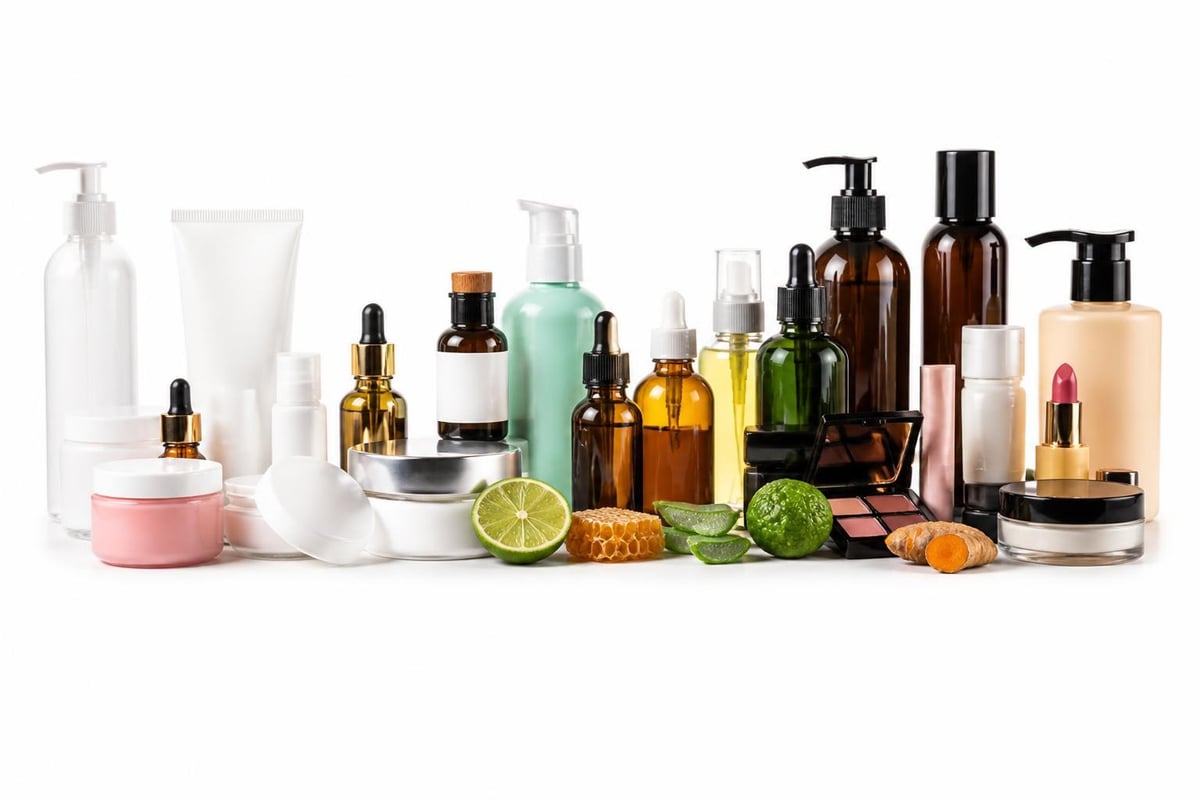
Thai cosmetics wholesale suppliers typically organize their product ranges into several distinct categories. Each category presents different opportunities and considerations for international buyers.
| Category | Examples | Key Considerations |
|---|---|---|
| Skincare | Moisturizers, serums, cleansers, masks | Requires stability testing, shelf-life validation |
| Herbal/Traditional | Thai balms, herbal soaps, traditional formulas | Cultural authenticity, ingredient sourcing |
| Color Cosmetics | Lipsticks, foundations, eyeshadows | Shade matching for target markets, trend awareness |
| Hair Care | Shampoos, conditioners, treatments | Formulation for different hair types, sulfate-free trends |
| Body Care | Lotions, scrubs, bath products | Packaging size variations, fragrance preferences |
| Natural/Organic | Coconut oil products, organic certified items | Certification requirements, premium positioning |
When entering the thai cosmetics wholesale market, buyers should identify which categories align best with their target customer base and distribution channels.
Regulatory Compliance for Thai Cosmetics Wholesale
Successfully importing cosmetics from Thailand requires thorough understanding of both Thai export regulations and your destination country's import requirements. Thailand's Food and Drug Administration (FDA) oversees cosmetics manufacturing and export, ensuring products meet safety and quality standards.
Thai Export Requirements
All cosmetics manufactured or exported from Thailand must comply with the Cosmetics Act and related FDA notifications. Thai suppliers handle most compliance work, but importers should verify:
- Product notification: Cosmetics must be notified with Thai FDA before sale or export
- GMP certification: Manufacturers should follow Good Manufacturing Practice standards
- Ingredient compliance: All ingredients must be approved for cosmetic use under Thai regulations
- Labeling accuracy: Product labels must accurately reflect contents and comply with regulations
- Safety assessment: Products should have undergone appropriate safety and stability testing
The Thai FDA provides detailed technical guidance on restricted substances, prohibited ingredients, and labeling requirements that manufacturers must follow.
ASEAN Harmonization Benefits
Thailand's participation in the ASEAN Cosmetic Directive creates advantages for thai cosmetics wholesale buyers targeting Southeast Asian markets. The directive harmonizes regulations across ASEAN member states, simplifying multi-country distribution.
Key benefits include:
- Standardized ingredient lists: ASEAN Handbook of Cosmetic Ingredients recognized across member states
- Mutual recognition: Products compliant in Thailand gain easier access to other ASEAN markets
- Simplified documentation: Reduced paperwork for intra-ASEAN trade
- Quality standards: Common GMP guidelines ensure consistent manufacturing quality
For buyers planning to distribute across multiple Asian markets, sourcing from Thai suppliers already compliant with ASEAN standards streamlines regulatory processes significantly.
Finding Reliable Thai Cosmetics Wholesale Suppliers
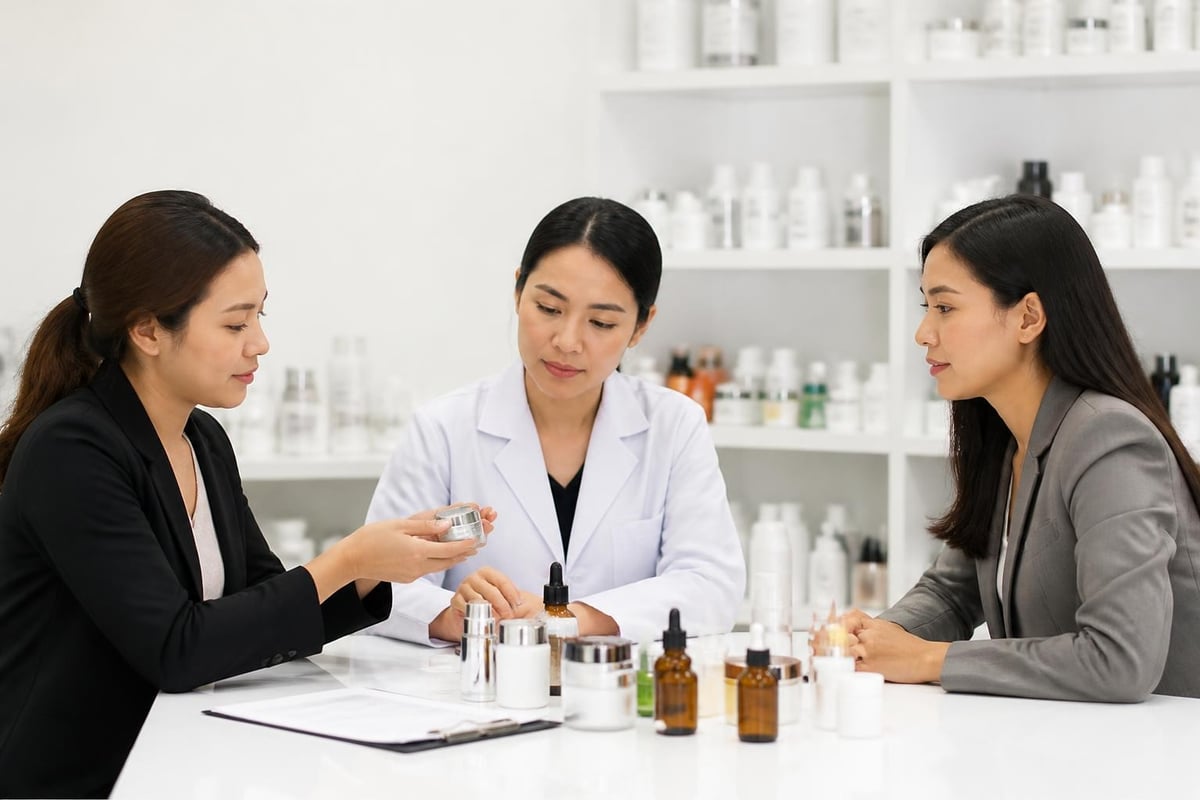
Identifying trustworthy suppliers represents one of the most critical steps in establishing a successful thai cosmetics wholesale business. Thailand hosts hundreds of cosmetics manufacturers, contract manufacturers, and trading companies, each with different capabilities, specializations, and minimum order requirements.
Supplier Types and Selection Criteria
Different supplier categories serve distinct buyer needs:
Direct Manufacturers produce their own formulations and brands, offering the best pricing for large volume orders but typically requiring higher MOQs. These suppliers provide the greatest customization flexibility for private label development.
Contract Manufacturers specialize in producing cosmetics for other brands, ideal for buyers wanting custom formulations or private label products. They offer formulation expertise and typically work with mid-range order quantities.
Trading Companies and Export Agents aggregate products from multiple manufacturers, providing one-stop sourcing for buyers wanting variety. They accommodate smaller orders but add margin to pricing. Companies specializing in Thai Beauty & Personal Care Products often fall into this category, offering curated selections with export support services.
Brand Distributors hold exclusive or authorized distribution rights for established Thai cosmetics brands, suitable for buyers wanting recognized brand names rather than private label.
Verification and Due Diligence
Before committing to a thai cosmetics wholesale supplier, conduct thorough verification:
- Request copies of FDA notifications and manufacturing licenses
- Ask for GMP certification documentation
- Verify business registration and export license
- Request product samples for quality evaluation
- Check production capacity and lead times
- Clarify payment terms and minimum order quantities
- Understand packaging options and customization capabilities
- Confirm export documentation support
Visit facilities when possible or engage third-party inspection services to verify manufacturing conditions, quality control processes, and actual production capabilities.
Natural and Herbal Thai Cosmetics Opportunities
Thailand's rich botanical heritage and traditional medicine knowledge create unique opportunities in the natural and herbal cosmetics segment. This category has experienced particularly strong global demand as consumers increasingly seek clean, natural, and sustainably-sourced beauty products. For balms and other topical herbal lines, our Thai herbal balm wholesale sourcing guide covers formulations, suppliers and regulations. Importers can also explore Thai herbal inhaler wholesale as a complementary herbal product line.
According to market research on natural cosmetics ingredients, European buyers show growing interest in authentic Asian botanical ingredients and traditional formulations. Thai suppliers are well-positioned to meet this demand.
Popular Thai Natural Ingredients
Thai cosmetics manufacturers incorporate numerous indigenous botanicals and natural materials into their formulations:
- Coconut oil: Virgin coconut oil serves as a base ingredient in moisturizers, hair treatments, and body care products
- Rice extracts: Rice bran oil and rice milk provide brightening and anti-aging properties
- Turmeric: Traditional Thai turmeric offers anti-inflammatory and skin-brightening benefits
- Tamarind: Natural AHA properties for gentle exfoliation
- Thai herbs: Lemongrass, kaffir lime, galangal, and other traditional herbs in various formulations
- Mangosteen: Antioxidant-rich tropical fruit extracts for anti-aging products
- Snake fruit (Salak): Astringent and oil-control properties for acne-prone skin
When sourcing natural thai cosmetics wholesale products, verify whether ingredients are organic certified, sustainably harvested, or carry specific quality certifications relevant to your target market.
Market Positioning for Natural Products
Natural and herbal Thai cosmetics command premium positioning in many international markets. Successful importers emphasize:
- Authenticity: Thailand's traditional knowledge and cultural connection to ingredients
- Sustainability: Eco-friendly sourcing and production methods
- Efficacy: Combination of traditional wisdom and modern formulation science
- Uniqueness: Exotic ingredients not commonly available in Western markets
The Thai beauty industry analysis shows that natural and herbal products represent a growing segment of Thai cosmetics exports, driven by global clean beauty trends.
Private Label and OEM Opportunities
Private label manufacturing represents a significant opportunity within the thai cosmetics wholesale sector. Many Thai manufacturers offer Original Equipment Manufacturing (OEM) and Original Design Manufacturing (ODM) services, enabling international buyers to develop custom cosmetics products under their own brand names.
OEM vs. ODM Services
Understanding the distinction helps buyers choose the right manufacturing partner:
| Service Type | What It Includes | Best For |
|---|---|---|
| OEM (Original Equipment Manufacturing) | Manufacturer produces using buyer's formulation and specifications | Buyers with existing formulas and specific requirements |
| ODM (Original Design Manufacturing) | Manufacturer provides formulation, packaging design, and production | Buyers wanting turnkey product development |
| Full Private Label | Complete product development, formulation, packaging, and branding support | New brands entering the market |
Private Label Development Process
Working with Thai manufacturers on private label cosmetics typically follows these steps:
- Concept discussion: Define product type, target market, positioning, and budget
- Formulation development: Manufacturer creates samples based on specifications
- Sample approval: Test products for quality, efficacy, and market fit
- Packaging design: Develop bottles, jars, labels, and outer packaging
- Regulatory preparation: Ensure formulations meet destination market requirements
- Production: Manufacture agreed quantities with quality control
- Quality inspection: Verify finished products meet specifications
- Export documentation: Prepare commercial invoices, packing lists, certificates of origin
Minimum order quantities for private label thai cosmetics wholesale typically range from 1,000 to 10,000 units per SKU, depending on product complexity and packaging requirements. Some manufacturers accommodate lower MOQs for initial orders or testing purposes.
Pricing and Cost Considerations
Understanding the complete cost structure is essential for profitability in thai cosmetics wholesale. Price varies significantly based on product category, formulation complexity, packaging, order quantity, and customization level.
Cost Components
Product FOB Price represents the factory price including packaging but excluding shipping. This forms your base cost and varies based on:
- Raw material costs and ingredient quality
- Formulation complexity and R&D investment
- Packaging materials and design sophistication
- Order volume (larger quantities achieve better unit pricing)
- Customization requirements and setup costs
Shipping and Logistics add substantial costs depending on shipping method, volume, weight, and destination:
- Sea freight: Most economical for large shipments, 3-6 weeks transit
- Air freight: Faster delivery at 3-4x sea freight cost, suitable for smaller urgent orders
- Express courier: Fastest but most expensive, typically for samples only
Import Duties and Taxes vary by destination country. Research your market's harmonized tariff codes for cosmetics to calculate landed costs accurately.
Compliance and Testing Costs include any required testing, certification, or regulatory submissions in your destination market.
Negotiating Better Wholesale Prices
Experienced buyers employ several strategies to optimize thai cosmetics wholesale pricing:
- Start with larger order quantities to demonstrate serious buying intent
- Commit to regular repeat orders rather than one-time purchases
- Consolidate multiple products with one supplier for volume leverage
- Accept standard packaging options rather than extensive customization
- Provide clear specifications upfront to minimize revision costs
- Build long-term relationships that lead to preferential pricing
- Consider annual purchasing agreements with volume commitments
Packaging and Labeling Requirements
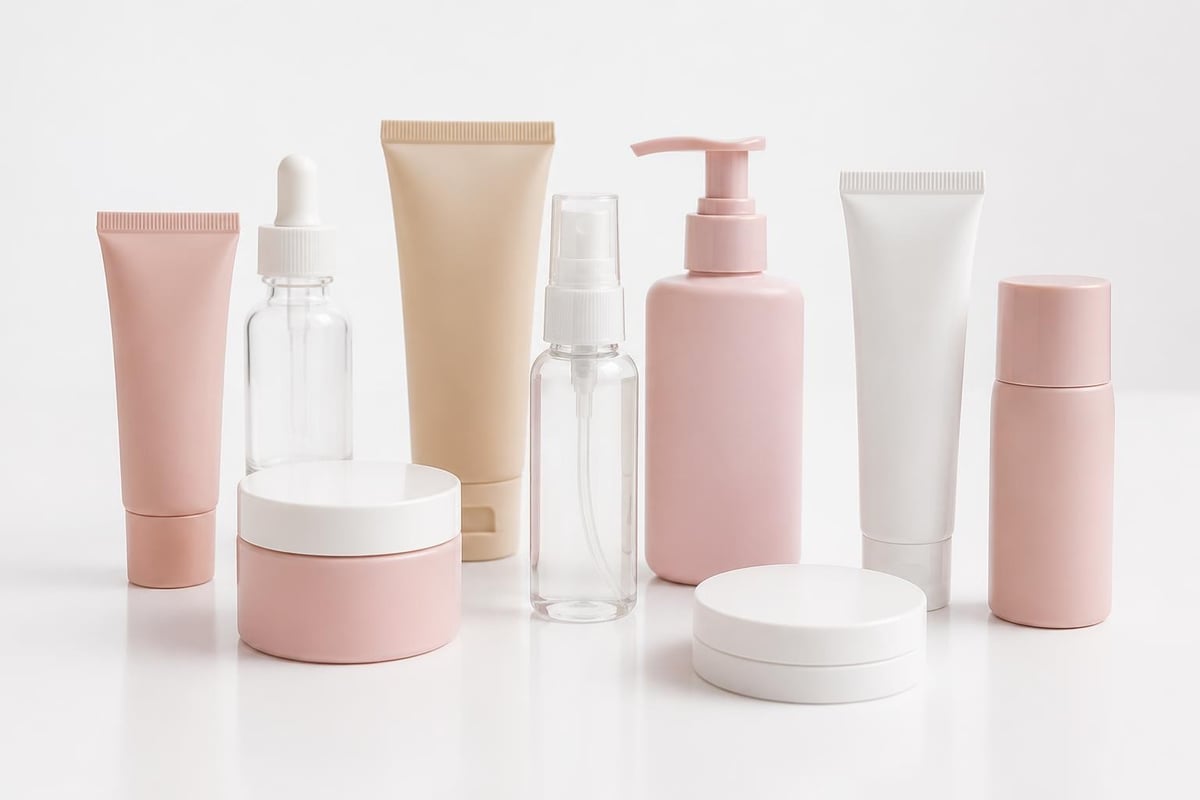
Packaging serves both protective and marketing functions in thai cosmetics wholesale. Thai manufacturers offer extensive packaging options, from simple functional containers to premium luxury packaging that supports higher retail pricing.
Packaging Options and Materials
Common packaging materials and formats include:
- Plastic containers: Cost-effective, lightweight, available in numerous shapes and sizes
- Glass bottles and jars: Premium appearance, suitable for luxury positioning, heavier shipping weight
- Airless pumps: Advanced dispensing for serums and treatments, maintains product stability
- Tubes: Flexible, economical, ideal for creams and gels
- Stick formats: Convenient for lip balms, solid perfumes, and deodorants
- Sachets: Sample sizes or single-use formats for testing or travel products
Thai manufacturers can source packaging locally or import specialized containers based on buyer specifications. Custom molds for unique packaging designs typically require minimum order quantities of 10,000-50,000 units and setup fees.
International Labeling Compliance
Product labels must comply with both Thai export requirements and destination market regulations. Essential label elements typically include:
- Product name and intended use
- Ingredient list (INCI nomenclature for international markets)
- Net content weight or volume
- Manufacturer name and address
- Country of origin (Made in Thailand)
- Batch number and manufacturing date
- Expiration date or period-after-opening symbol
- Usage instructions and warnings
- Barcode (if required for your distribution channels)
Different markets have specific requirements. European Union requires compliance with EU Cosmetics Regulation 1223/2009, including responsible person designation. United States follows FDA regulations under the Federal Food, Drug, and Cosmetic Act. Work with your thai cosmetics wholesale supplier to ensure labels meet all applicable requirements before production.
Quality Control and Product Testing
Maintaining consistent quality is crucial for brand reputation and regulatory compliance when importing thai cosmetics wholesale. Implementing proper quality control measures protects your business and customers.
Pre-Shipment Inspection
Before accepting large shipments, conduct thorough quality inspections:
- Visual inspection: Check product appearance, color consistency, texture
- Packaging quality: Verify printing quality, sealing integrity, proper labeling
- Sample testing: Test random samples from the production batch
- Documentation review: Confirm certificates, test reports, batch records
- Quantity verification: Ensure correct product quantities and assortments
- Carton inspection: Check outer packaging condition and labeling accuracy
Many buyers engage third-party inspection companies to conduct independent pre-shipment inspections at Thai factories, providing unbiased quality verification before products ship.
Stability and Safety Testing
Reputable Thai cosmetics manufacturers conduct stability testing to ensure products maintain quality throughout their shelf life. Request stability test data showing:
- Physical stability (no separation, color change, or texture degradation)
- Microbiological stability (preservation system effectiveness)
- Chemical stability (active ingredient potency maintenance)
- Packaging compatibility (no interaction between product and container)
For markets with strict regulatory requirements, additional safety assessments may be necessary, including challenge testing, preservative efficacy testing, and dermatological testing.
Logistics and Import Procedures
Efficient logistics management directly impacts profitability in thai cosmetics wholesale. Understanding shipping options, documentation requirements, and customs procedures ensures smooth import operations.
Shipping Methods and Considerations
Sea Freight (LCL and FCL)
Less than Container Load (LCL) suits smaller shipments, sharing container space with other cargo. Full Container Load (FCL) provides dedicated container space for larger volumes, offering better per-unit shipping costs.
Sea freight advantages:
- Most economical for bulk shipments
- Suitable for temperature-stable products
- Allows larger order quantities
Sea freight considerations:
- Longer transit times (3-6 weeks depending on destination)
- Container temperature fluctuations in some routes
- Port congestion delays during peak seasons
Air Freight
Air shipment provides faster delivery for urgent orders, new product launches, or temperature-sensitive formulations.
Air freight advantages:
- Rapid delivery (5-10 days door-to-door)
- Better for products sensitive to extended heat exposure
- Enables smaller inventory commitments
Air freight considerations:
- Significantly higher cost per kilogram
- Restrictions on certain cosmetic ingredients (aerosols, alcohol content)
- Limited to smaller shipment volumes
Required Export Documentation
Thai suppliers should provide comprehensive export documentation:
- Commercial Invoice: Detailed product description, quantities, values, and terms
- Packing List: Itemized contents of each carton and container
- Certificate of Origin: Verifies products manufactured in Thailand (may qualify for preferential tariff treatment under trade agreements)
- Bill of Lading (sea) or Airway Bill (air): Shipping contract and receipt
- FDA Notification Documents: Copies of Thai FDA cosmetics notifications
- Analysis Certificates: Quality test reports and specifications
- Insurance Certificate: If shipping is insured
Additional documentation may be required for specific destinations, including import permits, sanitary certificates, or free sale certificates.
Market Trends Shaping Thai Cosmetics Wholesale
Staying informed about emerging trends helps buyers make strategic sourcing decisions and identify growth opportunities within thai cosmetics wholesale.
Current Market Developments
Clean Beauty Movement: Consumer demand for natural, non-toxic, and transparent ingredient formulations continues accelerating globally. Thai manufacturers increasingly reformulate products to eliminate parabens, sulfates, phthalates, and synthetic fragrances.
Sustainability Focus: Eco-conscious consumers seek brands using sustainable packaging, ethical sourcing, and environmentally responsible manufacturing. Thai suppliers respond with refillable packaging, biodegradable materials, and carbon-neutral production initiatives.
K-Beauty and J-Beauty Influence: While Korea and Japan lead Asian beauty trends, Thai cosmetics incorporate popular Asian beauty concepts including multi-step skincare, essence and serum formats, and innovative textures.
Men's Grooming Growth: Male cosmetics and grooming products represent a fast-growing segment. Thai manufacturers develop men's skincare lines, beard care products, and grooming essentials specifically formulated for male consumers.
Personalization and Customization: Technology enables greater product customization. Some Thai manufacturers offer personalized formulation services, custom shade matching, and individual product customization for premium markets.
According to Thailand's trade policy analysis, the government recognizes cosmetics as a strategic export sector with significant growth potential, implementing policies to support manufacturers and exporters in accessing international markets.
Emerging Product Categories
Innovative Thai cosmetics categories gaining international buyer interest:
- CBD and hemp cosmetics: Following legalization of cannabis in Thailand, CBD-infused skincare and wellness products
- Fermented ingredients: Probiotic skincare and fermented botanical extracts
- Hybrid products: Multi-functional formulations combining skincare and makeup benefits
- Waterless cosmetics: Concentrated formats reducing water content for sustainability
- Microbiome-friendly formulas: Products supporting skin's natural bacterial balance
Building Successful Thai Cosmetics Import Business
Long-term success in thai cosmetics wholesale requires strategic planning beyond initial product sourcing. Consider these elements when developing your import business.
Market Entry Strategies
Different approaches suit different buyer situations:
Test Marketing Approach: Start with smaller orders of existing Thai brands to test market reception before committing to larger investments. This minimizes risk while gathering customer feedback and sales data.
Private Label Strategy: Develop custom formulations under your own brand from the start, creating differentiation and higher margins but requiring greater upfront investment.
Hybrid Model: Combine established Thai brands (for immediate revenue and market presence) with private label development (for long-term brand building and differentiation).
Distribution Channel Considerations
Your chosen distribution channels influence product selection, packaging, and pricing strategies:
- Retail stores: Require attractive packaging, competitive pricing, appropriate margins
- E-commerce platforms: Need excellent product photography, detailed descriptions, shipping-friendly packaging
- Wholesale to smaller retailers: Volume-based pricing, flexible assortment options
- Professional channels: Salons, spas, and clinics seek professional-size formats and treatment-specific products
- Hotel and hospitality: Amenity-size products, custom branding opportunities
Relationship Management with Thai Suppliers
Strong supplier relationships provide competitive advantages:
- Communication consistency: Regular contact maintains relationship beyond order placement
- Payment reliability: Timely payments build trust and may unlock better terms
- Feedback sharing: Provide market insights and customer feedback to suppliers
- Growth partnership: Share your business goals so suppliers can support expansion
- Problem resolution: Address issues promptly and professionally to maintain positive relationships
International buyers can leverage professional sourcing services that manage supplier relationships and quality control on their behalf, particularly valuable when establishing operations in a new market.
Due Diligence and Risk Management
Protecting your business requires careful attention to potential risks in thai cosmetics wholesale importing.
Common Risk Factors
Quality Inconsistency: Variations between samples and bulk production can occur. Mitigate by requesting pre-production samples from actual production batches and conducting thorough pre-shipment inspections.
Regulatory Changes: Both Thai export regulations and destination country import requirements evolve. Stay informed through official channels and maintain regulatory compliance documentation.
Intellectual Property Issues: Ensure products don't infringe existing patents, trademarks, or designs. Verify your supplier has rights to any branded ingredients or technologies used.
Supply Chain Disruptions: Natural disasters, political instability, or global events can interrupt supply. Develop backup supplier relationships and maintain appropriate inventory buffers.
Currency Fluctuations: Exchange rate changes between your currency and Thai Baht affect costs. Consider hedging strategies for large orders or use pricing agreements that account for currency volatility.
Legal and Contract Considerations
Protect your interests through proper legal documentation:
- Written supply agreements: Formalize terms, specifications, quality standards, and responsibilities
- Quality assurance clauses: Define acceptable quality levels and remedies for defects
- Intellectual property protection: Clarify ownership of custom formulations and designs
- Confidentiality agreements: Protect proprietary information and business relationships
- Payment terms: Clear payment milestones, methods, and dispute resolution procedures
Consider engaging legal counsel familiar with international trade and Thai commercial law when establishing significant business relationships.
Thailand's cosmetics industry offers exceptional opportunities for international buyers seeking quality products, competitive pricing, and unique formulations rooted in natural ingredients and traditional knowledge. Success in thai cosmetics wholesale requires thorough supplier verification, regulatory compliance understanding, and strategic relationship building with reliable Thai partners. Whether you're looking to source established Thai beauty brands, develop private label products, or access unique natural cosmetic formulations, partnering with an experienced Thailand-based supplier streamlines the entire process. BUARADA specializes in connecting international wholesalers, distributors, and retailers with premium Thai cosmetics and personal care products, providing end-to-end export support from sourcing through shipping documentation. Contact our team to discuss your thai cosmetics wholesale requirements and discover how we can support your import business growth.