
The global market for skin brightening and whitening supplements continues to expand as consumers across Asia, the Middle East, and beyond seek products that promote a more even complexion and radiant appearance. For international wholesalers, distributors, and retailers, understanding the composition, safety standards, and regulatory landscape surrounding these products is essential before adding them to your import portfolio. A whitening supplement typically contains ingredients like glutathione, vitamin C, alpha-lipoic acid, and botanical extracts formulated to support skin health from within. Sourcing these products from Thailand offers access to manufacturers with expertise in herbal formulations, natural ingredients, and cost-competitive production capabilities, making Thai suppliers increasingly attractive partners for B2B buyers worldwide.
Understanding Whitening Supplement Ingredients and Mechanisms
Whitening supplements rely on several core active ingredients, each with distinct mechanisms for influencing melanin production and skin appearance. Glutathione, a tripeptide antioxidant naturally produced in the body, has become the most widely recognized ingredient in oral skin whitening formulations. Research into oral glutathione bioavailability demonstrates varying absorption rates depending on formulation and dosage, which importers should verify through supplier documentation.
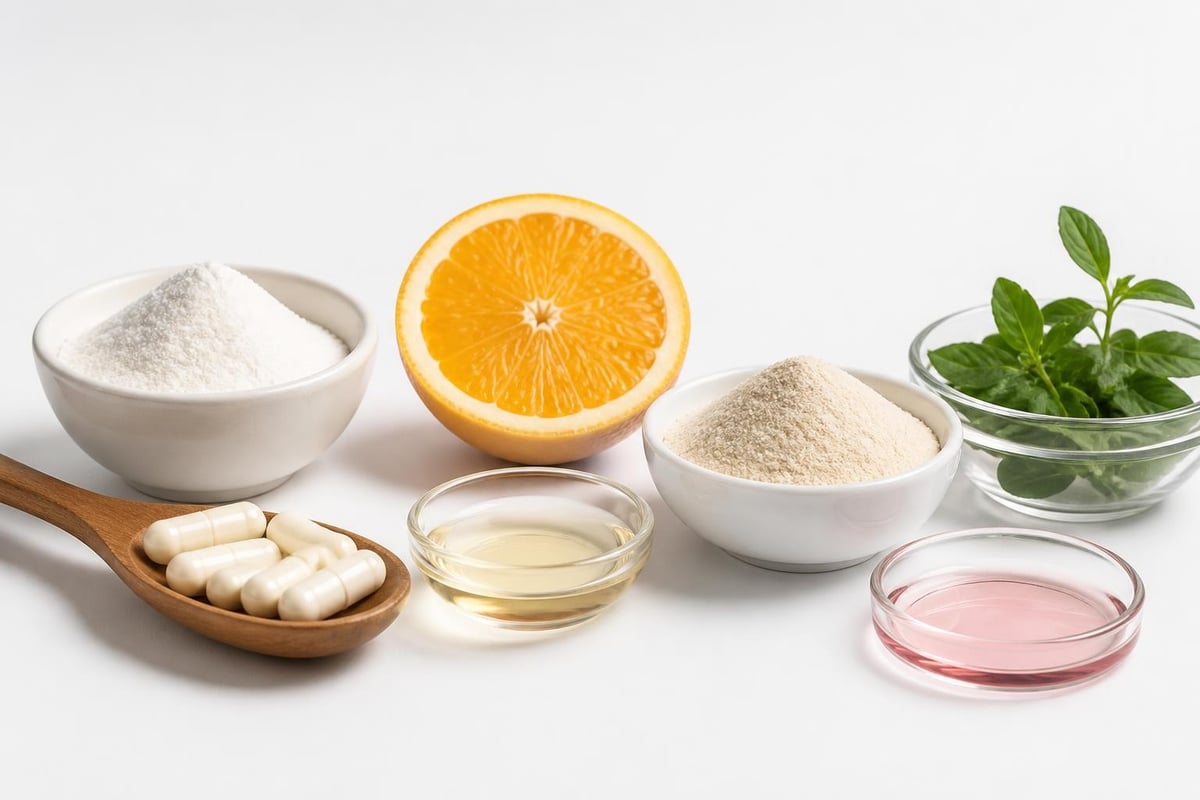
Common Active Ingredients in Formulations
When evaluating products from potential Thai suppliers, buyers will encounter several standard components:
- L-Glutathione: The primary active ingredient, typically dosed between 500-1000mg per serving
- Vitamin C (Ascorbic Acid): Enhances glutathione efficacy and provides independent antioxidant benefits
- Alpha-Lipoic Acid (ALA): Supports glutathione recycling within cells
- Collagen Peptides: Often included for skin structure support
- Botanical Extracts: Grapeseed, pine bark, or traditional Thai herbs for additional antioxidant activity
The synergistic combination of these ingredients forms the basis for most commercial whitening supplement formulations. Thai manufacturers frequently incorporate locally sourced botanical ingredients, creating unique product profiles that differentiate them in international markets.
Manufacturing Standards and Quality Considerations
For B2B buyers sourcing from Thailand, verifying manufacturing standards is non-negotiable. Reputable Thai suppliers typically maintain GMP (Good Manufacturing Practice) certifications and can provide:
| Quality Element | What to Verify | Why It Matters |
|---|---|---|
| GMP Certification | ISO 22000, HACCP, or local Thai FDA GMP | Ensures consistent production quality |
| Ingredient Testing | Certificate of Analysis (CoA) for raw materials | Confirms identity and purity |
| Heavy Metal Screening | Lead, mercury, arsenic, cadmium limits | Critical for consumer safety |
| Microbiological Testing | Bacterial and fungal contamination limits | Prevents product recalls |
| Stability Testing | Shelf-life validation data | Supports expiration date claims |
These certifications and testing protocols protect your business reputation and ensure compliance with import regulations in your target markets. When evaluating Thai Beauty & Personal Care Products suppliers, requesting this documentation upfront streamlines due diligence.
Regulatory Landscape and Safety Considerations
International buyers must navigate complex regulatory frameworks that vary significantly across destination markets. While dietary supplements face less stringent pre-market approval than pharmaceuticals, they remain subject to safety standards, labeling requirements, and ingredient restrictions that differ by jurisdiction.
Global Regulatory Variations
Understanding where whitening supplements fall within regulatory classifications helps prevent costly compliance failures:
United States: The FDA regulates these products as dietary supplements under DSHEA (Dietary Supplement Health and Education Act), requiring manufacturers to ensure safety but not pre-market approval. Claims must be substantiated and cannot imply disease treatment.
European Union: The European Commission Cosmetics Directive provides comprehensive guidance on restricted ingredients. While this directive primarily covers topical products, oral supplements making cosmetic claims may face additional scrutiny regarding ingredient safety.
Southeast Asia: ASEAN Cosmetic Directive harmonizes some standards, but individual countries maintain specific requirements. Thailand's FDA regulates domestic production, while importers must verify compliance with destination-country rules.
Middle East: GCC countries enforce Halal certification requirements and specific ingredient prohibitions, particularly concerning alcohol-based extracts and certain animal-derived components.
The complexity of these frameworks underscores why partnering with experienced Thai exporters who understand international compliance can significantly reduce market-entry barriers for distributors and wholesalers.
Critical Safety Considerations
The WHO initiative on eliminating mercury-containing skin-lightening products highlights ongoing public health concerns about dangerous ingredients in some skin whitening products. While this initiative primarily addresses topical creams, it reflects broader scrutiny of the category that affects market perception of all whitening products, including supplements.
For wholesale buyers, safety due diligence includes:
- Verifying absence of prohibited substances (mercury, hydroquinone in jurisdictions where banned, undeclared steroids)
- Confirming proper dosage levels that don't exceed safe upper limits
- Reviewing adverse event reporting systems your supplier maintains
- Understanding potential drug interactions customers should be aware of
The Maryland Poison Center bulletin on skin lightening products provides practical context on clinical harms associated with unsafe formulations, informing the questions savvy importers should ask suppliers.

Sourcing Whitening Supplements from Thailand
Thailand has emerged as a strategic sourcing destination for beauty and wellness supplements due to several competitive advantages: established herbal medicine traditions, modern manufacturing infrastructure, competitive pricing, and geographic proximity to major Asian consumer markets.
Advantages of Thai Suppliers
When international buyers evaluate Thailand as a sourcing origin, several factors drive selection:
Cost Competitiveness: Thai manufacturing costs typically range 15-30% below comparable facilities in developed markets while maintaining international quality standards. This pricing advantage improves margin potential for distributors and retailers.
Ingredient Access: Thailand's biodiversity provides access to unique botanical ingredients like mangosteen, rice bran extract, and traditional Thai herbs that create product differentiation in crowded markets.
Production Flexibility: Thai manufacturers often accommodate smaller minimum order quantities (MOQs) than Chinese or Korean counterparts, making them accessible for mid-sized importers testing new markets.
Export Infrastructure: Well-developed logistics networks and free trade agreements (ASEAN, RCEP) facilitate efficient export to target markets across Asia, the Middle East, and beyond.
Vetting Potential Suppliers
Professional buyers should implement systematic supplier evaluation protocols:
- Request certifications and testing reports for recent production batches
- Conduct facility audits (virtual or in-person) to verify manufacturing conditions
- Order samples for independent laboratory testing in your market
- Verify export documentation capability including certificates of origin, health certificates, and halal certification if required
- Assess communication responsiveness and English-language capability for ongoing support
This methodical approach identifies reliable partners capable of supporting long-term business growth. Importers seeking diverse Thai health and wellness products benefit from working with sourcing specialists who maintain established supplier networks.
Market Positioning and Consumer Demand Drivers
Understanding end-consumer preferences helps wholesalers and distributors select whitening supplement formulations with strong market potential. Consumer demand varies significantly across geographic markets, influencing which product attributes drive purchase decisions.
Regional Preference Patterns
| Region | Primary Drivers | Preferred Formats | Price Sensitivity |
|---|---|---|---|
| Southeast Asia | Skin brightening efficacy, visible results | Capsules, softgels, effervescent tablets | Moderate to high |
| Middle East | Halal certification, premium ingredients | Capsules, beauty drinks | Low to moderate |
| East Asia | Clinical research backing, brand reputation | Capsules, powders | Low |
| North America | Natural ingredients, clean label | Capsules, gummies | Moderate |
These patterns inform product selection for import portfolios tailored to specific markets. Distributors serving multiple regions may need diversified product lines to address varying consumer expectations.
Formulation Trends Influencing Buyer Decisions
Current market trends shape which whitening supplement formulations gain traction:
Synergistic Combinations: Products combining glutathione with complementary antioxidants (vitamin C, ALA, CoQ10) command premium pricing and demonstrate stronger consumer appeal than single-ingredient offerings.
Clean Label Movement: Formulations emphasizing natural sources, minimal additives, and transparent ingredient lists resonate with health-conscious consumers, particularly in Western markets.
Delivery Innovation: Novel formats including sublingual strips, liposomal encapsulation, and beauty beverages differentiate premium products from standard capsules.
Holistic Beauty: Supplements that combine skin brightening with anti-aging benefits, UV protection support, or hydration enhancement align with comprehensive beauty-from-within positioning.
Wholesalers who understand these trends can guide retail partners on inventory selection and positioning strategies that maximize category performance.
Quality Control and Testing Protocols
For importers building sustainable whitening supplement businesses, robust quality assurance separates professional operations from opportunistic traders. Implementing systematic testing protocols protects brand reputation and ensures regulatory compliance across destination markets.
Essential Testing Categories
Professional buyers should require or conduct the following tests:
Identity Testing: Confirms that declared ingredients (especially glutathione, vitamins, and botanical extracts) are present at claimed concentrations. High-performance liquid chromatography (HPLC) provides definitive ingredient verification.
Purity Analysis: Screens for contaminants including heavy metals, pesticide residues, and microbiological hazards. The systematic review of mercury exposures from skin-lightening products underscores why heavy metal testing remains critical even for oral supplements.
Potency Verification: Validates that active ingredients maintain declared strength throughout shelf life, not just at manufacturing.
Dissolution Testing: For capsules and tablets, confirms the supplement releases ingredients appropriately for absorption.
Many importers partner with independent laboratories in their destination markets to verify supplier claims before accepting shipments. This investment typically represents 0.5-2% of order value but prevents costly recalls or compliance violations.
Documentation for Traceability
Comprehensive documentation supports regulatory compliance and rapid response to quality issues:
- Batch production records with ingredient lot numbers
- Certificates of Analysis from raw material suppliers
- Stability testing data supporting shelf-life claims
- Allergen declarations and Halal/Kosher certifications if applicable
- Manufacturing facility audit reports
Thai suppliers accustomed to international export provide this documentation systematically. Buyers should establish clear documentation requirements in purchase agreements to ensure consistent access to necessary records.
Navigating Claims and Marketing Considerations
Whitening supplement marketing involves careful navigation of regulatory boundaries around permissible claims. What manufacturers and importers can legally state about product benefits varies significantly across jurisdictions, requiring market-specific marketing materials.
Permissible vs. Prohibited Claims
Understanding claim categories helps avoid regulatory violations:
Structure/Function Claims (Generally Permitted): Statements like "supports skin health," "provides antioxidant support," or "promotes even skin tone" describe the supplement's role in supporting normal body function without requiring pre-approval in most jurisdictions.
Disease Claims (Prohibited without approval): Any suggestion that the product treats, cures, or prevents disease (including conditions like hyperpigmentation as a pathological state) typically triggers drug classification requiring extensive regulatory approval.
Cosmetic Effect Claims (Variable): Claims about "whitening," "brightening," or "lightening" face different regulatory treatment depending on jurisdiction. Some markets restrict these claims for oral products, while others permit them with substantiation.
The Consumer Reports analysis of supplement regulation provides context on enforcement limitations that affect how strictly various claims are monitored, though professional importers should operate conservatively regardless of enforcement probability.
Substantiation Requirements
Responsible suppliers and importers maintain scientific substantiation for marketing claims:
- Published research on key ingredients (glutathione, vitamin C, botanical extracts)
- Clinical studies demonstrating safety and efficacy of specific formulations
- Consumer perception studies validating claim interpretation
- Expert opinions supporting structure/function statements
While pre-market claim approval isn't required in most supplement frameworks, maintaining robust substantiation files protects against regulatory challenges and supports credible marketing to retail partners and end consumers.
Packaging, Labeling, and Shelf-Life Considerations
Packaging and labeling represent critical touchpoints where regulatory compliance, product protection, and consumer communication converge. International buyers must ensure Thai suppliers understand destination-market requirements for these elements.
Labeling Compliance Essentials
Compliant supplement labels include jurisdiction-specific mandatory elements:
- Product name and net quantity
- Complete ingredient list (often required in descending order by weight)
- Allergen declarations following local formats
- Manufacturer/distributor contact information
- Country of origin statements
- Lot number and expiration date
- Storage instructions
- Supplement facts panel (format varies by market)
- Required disclaimers (e.g., "This product is not intended to diagnose, treat, cure, or prevent any disease" in the U.S.)
For whitening supplements entering multiple markets, buyers often request bilingual labeling or market-specific label versions. Thai manufacturers experienced in export typically accommodate these requirements, though minimum order quantities may apply for custom labeling.
Packaging Materials and Protection
Ingredient stability determines appropriate packaging specifications:
Blister Packs: Provide superior moisture and oxygen protection for glutathione and other oxidation-sensitive ingredients. Higher cost per unit but extends shelf life in humid climates.
Bottle with Desiccant: Standard option balancing cost and protection. Requires quality HDPE or PET bottles with secure caps and desiccant packets.
Sachets: Popular for single-serving powders or beauty drinks. Aluminum foil laminate prevents light and oxygen exposure.
Light Protection: Glutathione and vitamin C degrade with light exposure, requiring amber bottles or opaque packaging for loose products.
Buyers should specify packaging requirements based on destination climate, distribution channel requirements (retail shelf vs. e-commerce), and target shelf life (typically 24-36 months from manufacture).
Private Label and Custom Formulation Opportunities
Many Thai supplement manufacturers offer private label services and custom formulation development, creating opportunities for importers to build proprietary product lines rather than simply reselling generic formulations.
Private Label Advantages for Importers
Working with Thai suppliers on private label whitening supplements offers several strategic benefits:
Brand Differentiation: Custom formulations incorporating unique ingredient combinations or delivery systems create defensible market positions that competitors cannot easily replicate.
Margin Enhancement: Private label typically delivers 15-30% higher margins compared to distributing established brands, since brand marketing costs are minimized.
Market Responsiveness: Direct manufacturer relationships enable rapid reformulation to address emerging trends or regulatory changes.
Exclusivity Agreements: Many Thai manufacturers grant territorial exclusivity for custom formulations, protecting your investment in market development.
Custom Formulation Process
Developing a proprietary whitening supplement with a Thai manufacturer typically follows this sequence:
- Concept Development: Define target consumer, desired benefits, price positioning, and differentiation strategy
- Ingredient Selection: Collaborate with manufacturer's formulators on active and inactive ingredients
- Prototype Formulation: Manufacturer creates initial samples for testing and refinement
- Stability Testing: Validate shelf life and ingredient stability (3-6 months for accelerated testing)
- Regulatory Review: Ensure formulation complies with destination-market regulations
- Trial Production: Small batch to validate manufacturing processes
- Full Production: Scale to commercial volumes with agreed MOQs
This process typically requires 4-8 months from concept to first commercial shipment. Minimum order quantities for custom formulations generally start at 5,000-10,000 units, though this varies by manufacturer and complexity.
Supply Chain and Logistics Considerations
Efficient logistics and supply chain management directly impact landed costs and product quality for whitening supplement importers. Temperature-sensitive ingredients and shelf-life considerations create specific challenges for international shipments from Thailand.
Shipping Methods and Transit Protection
Importers typically choose between several shipping options based on order size and urgency:
Sea Freight: Most cost-effective for container loads (20' or 40' containers). Transit time from Thailand to major ports ranges 14-35 days depending on destination. Requires attention to container temperature during tropical transit.
Air Freight: Faster (3-7 days) but significantly more expensive. Appropriate for initial trial orders, urgent replenishment, or premium products where speed to market justifies higher logistics costs.
Temperature Considerations: While whitening supplements don't typically require refrigeration, extended exposure to temperatures above 30°C (86°F) can accelerate ingredient degradation. Summer shipments or routes through hot regions may benefit from insulated containers or air freight.
Import Documentation and Clearance
Smooth customs clearance requires comprehensive documentation:
- Commercial invoice with accurate HS codes (typically 2106.90 for food supplements)
- Packing list detailing contents
- Certificate of Origin (preferably on Form E for ASEAN FTA benefits where applicable)
- Health Certificate or Free Sale Certificate
- Laboratory test reports (if required by destination country)
- Import permits (required in some markets before shipment)
- Halal certification (for markets requiring it)
Working with freight forwarders experienced in supplement imports from Thailand streamlines this process and reduces clearance delays that can impact product shelf life.
Building Long-Term Supplier Relationships
Sustainable whitening supplement import businesses depend on reliable, long-term partnerships with Thai manufacturers rather than transactional spot buying. Investing in relationship development yields multiple benefits including priority production allocation, flexible payment terms, and collaborative product development.
Partnership Development Strategies
Professional importers implement several practices to strengthen supplier relationships:
Transparent Communication: Share market feedback, sales forecasts, and strategic plans to help suppliers align production capacity and ingredient procurement with your needs.
Consistent Order Patterns: Regular, predictable ordering enables suppliers to optimize production scheduling and potentially offer better pricing through efficient capacity utilization.
Prompt Payment: Honoring payment terms builds trust and often unlocks more favorable commercial terms over time.
Joint Problem-Solving: When issues arise (quality variations, shipping delays, regulatory changes), collaborative rather than adversarial approaches preserve relationships and find solutions faster.
Market Intelligence Sharing: Providing suppliers insights into consumer trends, competitive products, and regulatory developments in your markets helps them improve formulations and identify new opportunities.
These practices transform transactional supplier relationships into strategic partnerships that create competitive advantages difficult for new market entrants to replicate quickly.
Sourcing whitening supplements from Thailand offers international buyers access to quality formulations, competitive pricing, and manufacturing flexibility that supports sustainable import businesses. Success requires thorough due diligence on ingredient safety, regulatory compliance, and supplier capabilities while understanding market-specific consumer preferences and claim restrictions. Whether you're a distributor, wholesaler, or retailer, partnering with an experienced Thailand-based export specialist streamlines sourcing, ensures quality standards, and accelerates market entry. BUARADA connects international buyers with vetted Thai manufacturers across beauty, wellness, and personal care categories, providing sourcing support, quality verification, and export solutions tailored to your business requirements.