
The global wellness and beauty supplement market continues to expand rapidly, with collagen glutathione combinations emerging as one of the most sought-after product categories among international buyers. These formulations combine two powerful ingredients-collagen peptides for structural support and glutathione for antioxidant protection-creating synergistic effects that appeal to health-conscious consumers worldwide. For wholesalers, distributors, and retailers sourcing from Thailand, understanding the science, formulation strategies, and quality considerations behind collagen glutathione products is essential for meeting market demand and maintaining competitive advantage.
Understanding Collagen Glutathione Formulations
Collagen glutathione supplements represent a strategic combination of two distinct bioactive compounds. Collagen, typically sourced as hydrolyzed peptides, provides amino acids that support skin elasticity, joint health, and tissue repair. Glutathione, often called the "master antioxidant," plays crucial roles in cellular protection, detoxification, and skin brightening.
The Science Behind Combined Supplementation
Research demonstrates that both ingredients address different aspects of skin health and overall wellness. Clinical evidence for collagen supplementation shows measurable benefits for skin hydration, elasticity, and wrinkle reduction when taken consistently over 8-12 weeks. Glutathione supplementation, meanwhile, focuses on reducing oxidative stress and supporting melanin regulation.
When formulated together, these ingredients may offer complementary mechanisms:
- Collagen peptides provide building blocks for dermal structure and stimulate fibroblast activity
- Glutathione protects existing collagen from oxidative damage and supports even skin tone
- Combined effects may enhance overall skin appearance more effectively than single-ingredient products
- Synergistic potential appeals to consumers seeking comprehensive beauty-from-within solutions
A narrative review examining combined effects of collagen, curcumin, and glutathione noted that multi-ingredient formulations targeting peri- and post-menopausal women showed promise for addressing age-related dermal changes through multiple pathways.

Formulation Considerations for Product Development
International buyers sourcing collagen glutathione products must evaluate several formulation factors that directly impact product efficacy, stability, and market acceptance.
Ingredient Forms and Bioavailability
| Ingredient | Common Forms | Typical Dosage Range | Stability Considerations |
|---|---|---|---|
| Collagen | Hydrolyzed peptides, Type I/II/III | 2,500-10,000 mg | Heat-stable, moisture-sensitive |
| Glutathione | Reduced (GSH), liposomal, S-acetyl | 250-1,000 mg | Light-sensitive, pH-dependent |
| Combination | Powder blends, capsules, beverages | Varies by format | Requires stability testing |
The molecular weight of collagen peptides significantly affects absorption. Products using peptides with molecular weights between 2,000-5,000 Daltons generally demonstrate better bioavailability compared to larger molecules. For glutathione, reduced forms and advanced delivery systems like liposomal encapsulation may enhance cellular uptake, though these increase manufacturing costs.
Delivery Formats and Market Preferences
Different markets show distinct preferences for supplement formats:
Powder sachets dominate Asian markets, particularly in Thailand, Korea, and Japan, where consumers mix single-serve packets with water or beverages. This format allows higher collagen doses (5,000-10,000 mg) and appeals to ritualistic daily consumption habits.
Capsules and tablets perform well in Western markets and among buyers prioritizing convenience and portability. However, achieving meaningful collagen doses in capsule form requires multiple-capsule servings, which may reduce consumer compliance.
Ready-to-drink beverages represent premium positioning with higher price points. These formats often incorporate additional ingredients like vitamins C and E, hyaluronic acid, or botanical extracts to justify premium pricing and differentiate from powder alternatives.
For importers and distributors working with Thai Health & Wellness Products, powder sachet formats often represent the most cost-effective option for bulk purchasing while maintaining quality standards expected in international markets.
Quality Standards and Sourcing from Thailand
Thailand has established itself as a significant producer and exporter of wellness supplements, including collagen glutathione formulations. The country's strategic position in Southeast Asia, combined with established manufacturing infrastructure and competitive pricing, makes it an attractive sourcing destination for international buyers.
Manufacturing Standards and Certifications
When evaluating Thai suppliers for collagen glutathione products, buyers should verify manufacturing compliance with international standards. Reputable facilities typically maintain:
- GMP (Good Manufacturing Practice) certification for pharmaceutical-grade production
- ISO 22000 or HACCP standards for food safety management
- Halal certification for Muslim-majority markets
- Organic certifications when using organic-certified ingredients
- Export licenses and documentation for international trade compliance
Thai manufacturers often source marine collagen from sustainable fisheries in Southeast Asian waters or bovine/porcine collagen from regional suppliers. Glutathione may be produced through fermentation processes or sourced from established international ingredient suppliers.
Collagen Source Verification
The origin and type of collagen significantly impact product positioning and market acceptance:
- Marine collagen (from fish skin/scales) appeals to pescatarian consumers and those seeking Type I collagen
- Bovine collagen (from cattle hide/bones) provides both Type I and Type III collagen at competitive prices
- Porcine collagen offers good bioavailability but faces religious dietary restrictions
- Chicken-derived collagen supplies Type II collagen primarily for joint health applications
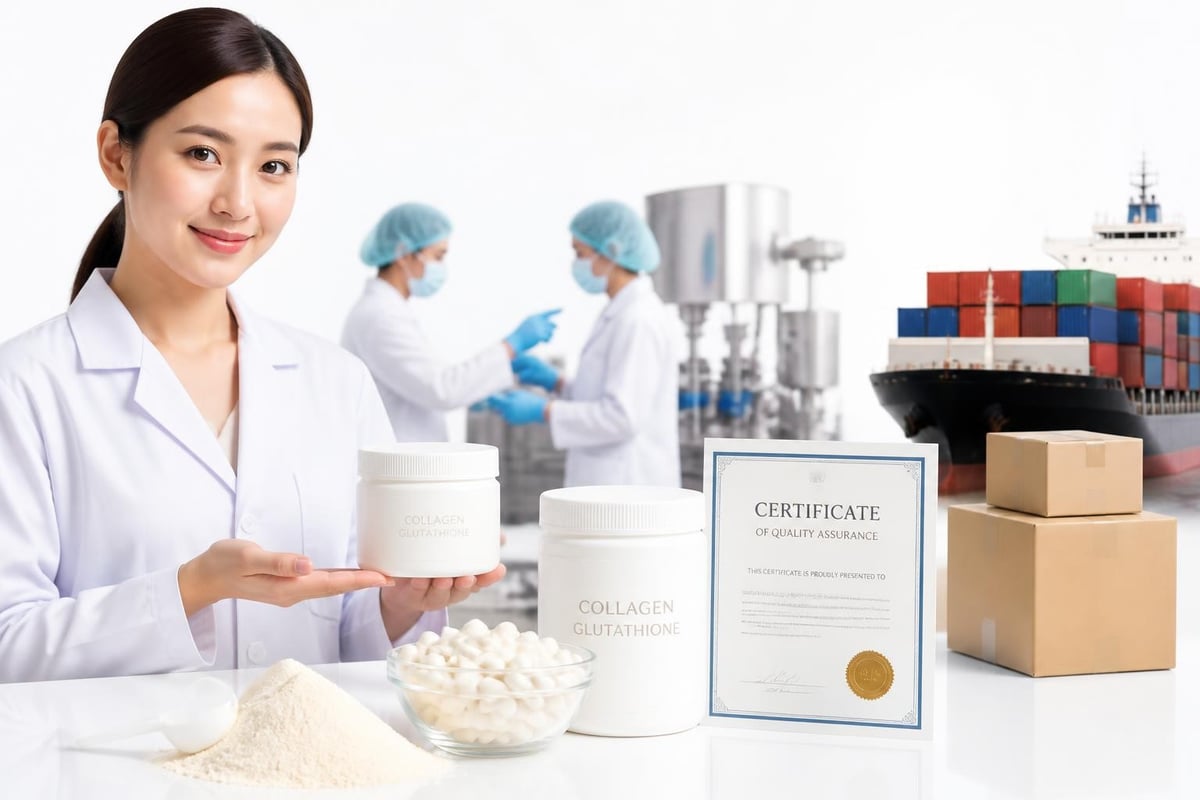
International buyers should request complete traceability documentation, including ingredient origin certificates, species identification, and testing reports confirming peptide molecular weight distribution.
Clinical Evidence and Marketing Claims
Understanding the research foundation behind collagen glutathione supplements helps buyers make informed sourcing decisions and develop compliant marketing strategies for their target markets.
Collagen Supplementation Research
Systematic reviews and meta-analyses of randomized controlled trials demonstrate that oral collagen supplementation can produce measurable improvements in skin hydration, elasticity, and wrinkle depth after 8-12 weeks of consistent use. The magnitude of these effects varies based on dosage, formulation, and population studied.
Key findings from clinical research include:
- Typical effective doses range from 2,500 to 10,000 mg daily
- Benefits accumulate over time, with optimal results appearing after 8-12 weeks
- Hydrolyzed collagen peptides show better absorption than non-hydrolyzed forms
- Combination with vitamin C may enhance collagen synthesis
- Individual responses vary based on age, baseline skin condition, and lifestyle factors
Glutathione Supplementation Evidence
Glutathione research presents a more complex picture. While glutathione plays essential roles in cellular function, oral bioavailability has historically been questioned. Recent studies using improved delivery methods show more promising results.
A multicenter randomized trial in Indonesia evaluated oral glutathione combined with antioxidant cofactors as a skin-lightening regimen, demonstrating measurable effects on melanin index when compared to placebo. This population-level data from Southeast Asia provides relevant evidence for products marketed in similar demographics.
However, buyers must recognize that:
- Glutathione absorption varies significantly between delivery formats
- Liposomal and S-acetyl forms may offer superior bioavailability
- Combination with vitamins C and E may enhance effectiveness
- Regulatory environments differ regarding skin-brightening claims
- Long-term safety data continues to accumulate
Market Opportunities and Target Demographics
The collagen glutathione category appeals to multiple consumer segments, each with distinct purchasing drivers and preferences.
Primary Market Segments
| Segment | Key Motivations | Preferred Formats | Price Sensitivity |
|---|---|---|---|
| Beauty-conscious women 25-45 | Skin appearance, anti-aging | Powder sachets, drinks | Moderate to low |
| Health-focused consumers 35-60 | Wellness, joint health | Capsules, powders | Moderate |
| Professional women 30-50 | Convenience, comprehensive benefits | Ready-to-drink, capsules | Low |
| Wellness enthusiasts | Natural ingredients, clean labels | Powders, capsules | Moderate |
Geographic markets show varying levels of maturity. Asian markets, particularly in Southeast Asia, demonstrate strong familiarity with both collagen and glutathione supplements, often preferring combination products. Western markets show growing interest but may require more educational marketing to communicate product benefits effectively.
Retail Channel Considerations
Distribution strategies impact product formulation and packaging decisions:
Direct-to-consumer brands often emphasize premium positioning, sophisticated packaging, and comprehensive ingredient transparency. These brands typically work with multiple SKUs targeting specific benefits (beauty, wellness, athletic recovery) and maintain higher margins.
Traditional retail channels including pharmacies, health stores, and supermarkets require competitive pricing, clear benefit communication, and sometimes promotional support. Products in these channels benefit from recognizable certifications and straightforward label claims.
Professional channels such as medical spas, dermatology clinics, and wellness centers seek products with strong clinical backing, professional-grade formulations, and practitioner education materials.
Regulatory Compliance Across Markets
International buyers must navigate varying regulatory frameworks governing collagen glutathione supplements across different jurisdictions.
Regional Regulatory Landscapes
United States: Dietary supplements fall under FDA oversight with specific requirements for labeling, claims, and Good Manufacturing Practices. Structure-function claims are permitted without pre-market approval, but disease claims require drug approval pathways.
European Union: Novel food regulations and food supplement directives govern product formulations, with member states maintaining some individual requirements. Maximum dosage levels may be specified for certain ingredients.
ASEAN Markets: Thailand, Malaysia, Singapore, and other Southeast Asian nations maintain individual supplement regulations while working toward harmonization through ASEAN frameworks. Import documentation, registration requirements, and labeling standards vary by country.
Australia/New Zealand: Therapeutic Goods Administration (TGA) oversight requires pre-market assessment and listing on the Australian Register of Therapeutic Goods (ARTG) for most supplements.
Buyers should verify that Thai suppliers can provide necessary documentation including:
- Certificates of Analysis (CoA) for each batch
- Heavy metal testing reports (lead, cadmium, mercury, arsenic)
- Microbiological safety testing
- Pesticide residue testing when applicable
- Shelf-life stability studies
- Export health certificates
- Country-of-origin documentation
Formulation Enhancements and Value Addition
Beyond basic collagen glutathione combinations, suppliers and buyers can explore value-added formulations that command premium pricing and differentiate products in competitive markets.
Complementary Ingredient Systems
Strategic addition of synergistic ingredients enhances product positioning:
- Vitamin C (ascorbic acid) supports collagen synthesis and glutathione recycling
- Hyaluronic acid adds hydration benefits and appeals to beauty-focused consumers
- Vitamin E (tocopherols) provides additional antioxidant protection
- Biotin and B-complex vitamins support hair, skin, and nail health claims
- Coenzyme Q10 adds anti-aging positioning for mature demographics
- Plant extracts (grape seed, pine bark, turmeric) contribute botanical appeal
Thailand's expertise in herbal and botanical ingredients provides unique opportunities for differentiation through locally-sourced extracts like mangosteen, butterfly pea, or Thai herbs traditionally used for beauty and wellness applications.

Clean Label and Sustainability Trends
Modern consumers increasingly scrutinize ingredient lists, sourcing practices, and environmental impact:
Minimal ingredient formulations using only essential components appeal to clean-label advocates. These products emphasize "no artificial colors, flavors, or preservatives" and transparent sourcing.
Sustainable sourcing certifications including Marine Stewardship Council (MSC) for marine collagen or organic certifications for complementary ingredients enhance brand reputation and justify premium pricing.
Environmentally conscious packaging using recyclable materials, reduced plastic content, or compostable sachets addresses growing environmental concerns among consumers and retailers.
Traceability and transparency through blockchain integration, QR codes linking to ingredient sources, or detailed supplier disclosure builds consumer trust and differentiates brands in crowded markets.
Pricing Structures and Margin Opportunities
Understanding cost structures and pricing dynamics helps international buyers negotiate effectively with Thai suppliers and position products competitively in their markets.
Cost Components and Pricing Factors
Wholesale pricing for collagen glutathione supplements varies based on several factors:
Raw material costs fluctuate based on collagen source (marine typically costs 2-3 times more than bovine), glutathione form (liposomal and S-acetyl command premiums), and additional ingredient complexity.
Manufacturing scale significantly impacts unit economics. Minimum order quantities typically range from 1,000 to 10,000 units for private label production, with larger volumes securing better pricing.
Packaging sophistication affects costs substantially. Basic foil sachets represent the most economical option, while premium glass bottles, specialty closures, or innovative dispensing systems increase per-unit costs.
Certification requirements add expenses but enable market access. Organic, Halal, Non-GMO, and specialized testing certifications each carry associated costs passed to buyers.
Custom formulation development requires investment in stability testing, flavor optimization, and regulatory review, typically amortized across initial production runs.
Market Positioning Strategies
Successful brands typically adopt one of several positioning strategies:
- Value positioning emphasizes competitive pricing, basic formulations, and wide distribution
- Premium positioning commands higher prices through superior ingredients, clinical backing, and sophisticated branding
- Specialty positioning targets niche markets (vegan alternatives, specific demographics, therapeutic applications)
- Professional positioning focuses on practitioner channels with evidence-based formulations and educational support
Procurement Best Practices for International Buyers
Establishing reliable supply chains for collagen glutathione products requires systematic evaluation and ongoing supplier relationship management.
Supplier Evaluation Criteria
When assessing Thai manufacturers and exporters:
Manufacturing capabilities should align with your volume requirements, quality expectations, and growth trajectory. Visit facilities when possible to verify equipment, cleanliness, and operational procedures.
Quality management systems extend beyond certifications to include documented procedures, batch record keeping, complaint handling, and continuous improvement processes.
Technical expertise in formulation development, stability testing, and regulatory compliance indicates suppliers who can support product optimization and market expansion.
Export experience with your target markets ensures familiarity with documentation requirements, shipping procedures, and regulatory standards specific to your destination countries.
Communication responsiveness and English proficiency facilitate smooth project management, specification alignment, and issue resolution.
Financial stability reduces supply chain risk. Request business references and verify operational longevity before committing to significant orders.
Specification Development and Quality Agreements
Clear specifications prevent misunderstandings and quality issues:
- Define precise ingredient requirements including botanical names, concentrations, and acceptable suppliers
- Specify testing protocols, acceptance criteria, and sampling procedures
- Establish packaging requirements, labeling specifications, and artwork approval processes
- Clarify intellectual property ownership for custom formulations
- Document shelf-life expectations and storage conditions
- Define complaint handling, corrective action, and product recall procedures
Testing and Quality Verification
International buyers should implement independent testing protocols to verify product quality and regulatory compliance beyond supplier-provided certificates.
Essential Testing Parameters
Identity testing confirms that ingredients match label claims using methods like HPLC, amino acid analysis, or DNA testing for collagen source verification.
Purity testing screens for contaminants including heavy metals (lead, cadmium, mercury, arsenic), microbiological contamination (total plate count, yeast, mold, pathogens), and pesticide residues when applicable.
Potency testing verifies active ingredient concentrations meet specifications. For collagen, this includes protein content and molecular weight distribution. For glutathione, assay testing confirms declared concentrations.
Stability testing ensures products maintain quality throughout shelf life under expected storage conditions. Accelerated stability studies can predict long-term performance.
Third-party laboratories in destination markets or internationally recognized testing facilities provide independent verification that supports regulatory compliance and quality assurance programs.
Private Label and Brand Development Opportunities
Many Thai suppliers, including established exporters, offer private label services enabling buyers to launch branded collagen glutathione products without investing in manufacturing infrastructure.
Private Label Service Models
Formula selection from existing product libraries represents the fastest market entry with minimal development costs. Suppliers maintain stock formulas optimized for different markets and price points.
Custom formulation allows complete product differentiation through unique ingredient combinations, dosages, and delivery formats. Development timelines typically extend 3-6 months including stability testing and regulatory review.
Packaging customization ranges from simple label application to fully custom packaging design, materials selection, and structural development. Investment scales with sophistication level.
Regulatory support varies by supplier. Leading exporters provide documentation assistance, certificate provision, and guidance on market-specific requirements, while others require buyers to manage regulatory compliance independently.
Brand Positioning and Marketing Support
Some Thai suppliers extend services beyond manufacturing:
- Providing product photography and lifestyle imagery for marketing use
- Developing educational content explaining product benefits and ingredients
- Creating point-of-sale materials and digital assets
- Offering market insights and competitive analysis
- Supporting trade show participation or buyer introductions
These value-added services particularly benefit smaller buyers or those entering wellness categories for the first time.
Future Trends and Innovation Directions
The collagen glutathione category continues evolving as research advances, consumer preferences shift, and new technologies emerge.
Emerging Formulation Approaches
Personalized supplementation using genetic testing, skin analysis, or health assessments to recommend tailored dosages and ingredient combinations represents a growing trend among premium brands.
Microbiome-supporting formulations add prebiotics, probiotics, or postbiotics recognizing the gut-skin axis and systemic health impacts.
Sustained-release technologies aim to extend ingredient bioavailability and reduce dosing frequency through specialized encapsulation or matrix systems.
Plant-based collagen alternatives using collagen-boosting ingredients rather than animal-derived collagen itself address vegan consumers while maintaining category relevance.
Digital Integration and Consumer Engagement
Modern supplement brands increasingly leverage technology:
- Mobile apps tracking consumption, providing usage reminders, and documenting progress through photos
- Subscription models with automatic replenishment and loyalty rewards
- Social proof integration showcasing user reviews and before-after documentation
- Educational content libraries explaining ingredient science and usage optimization
- Community features connecting users with similar wellness goals
International buyers sourcing from Thailand should consider how product packaging and branding can facilitate these digital experiences through QR codes, unique product identifiers, or platform integration.
Market Entry Strategies for New Buyers
Launching collagen glutathione products requires strategic planning beyond supplier selection and product development.
Channel Selection and Distribution Planning
E-commerce platforms including Amazon, specialized wellness marketplaces, and direct-to-consumer websites offer rapid market testing with lower infrastructure investment. Performance data guides inventory planning and product optimization.
Retail partnerships with health stores, pharmacies, or beauty retailers provide credibility and customer access but require promotional support, minimum volumes, and often consignment terms or return allowances.
Professional channels through wellness practitioners, medical spas, or fitness facilities enable premium pricing and trusted recommendations but involve relationship building and practitioner education.
International distributors familiar with your target market can accelerate expansion while managing regulatory compliance, warehousing, and customer service, though they reduce margins and direct customer relationships.
Marketing and Education Requirements
Consumer understanding of collagen glutathione benefits varies significantly across markets. Successful launches typically include:
- Educational content explaining ingredient benefits, usage protocols, and expected timelines for results
- Influencer partnerships or brand ambassadors demonstrating product use and sharing experiences
- Clinical study references or ingredient efficacy data supporting benefit claims
- User testimonials and before-after documentation (where legally permissible)
- Comparison positioning relative to single-ingredient alternatives or competing brands
The depth and style of education must align with market sophistication and regulatory constraints in target jurisdictions.
Collagen glutathione supplements represent a compelling category for international buyers seeking products that combine established wellness ingredients with strong consumer demand across multiple markets. Success requires careful attention to formulation quality, regulatory compliance, supplier reliability, and market-specific positioning strategies that resonate with target consumers. BUARADA connects international wholesalers, distributors, and retailers with quality Thai wellness products, providing sourcing expertise, export documentation support, and reliable supply chains for buyers building or expanding their supplement portfolios in the growing global wellness market.