
The global wellness and beauty supplement market has witnessed remarkable growth in glutathione-based products, with gluta powder emerging as a preferred format for manufacturers, wholesalers, and distributors. This concentrated form of glutathione offers versatility for product development, cost efficiency in bulk handling, and stability advantages that appeal to international buyers. For importers and retailers seeking to capitalize on the expanding demand for skin brightening and antioxidant supplements, understanding the sourcing landscape, quality parameters, and regulatory considerations surrounding gluta powder is essential for building competitive product portfolios.
Understanding Gluta Powder Composition and Forms
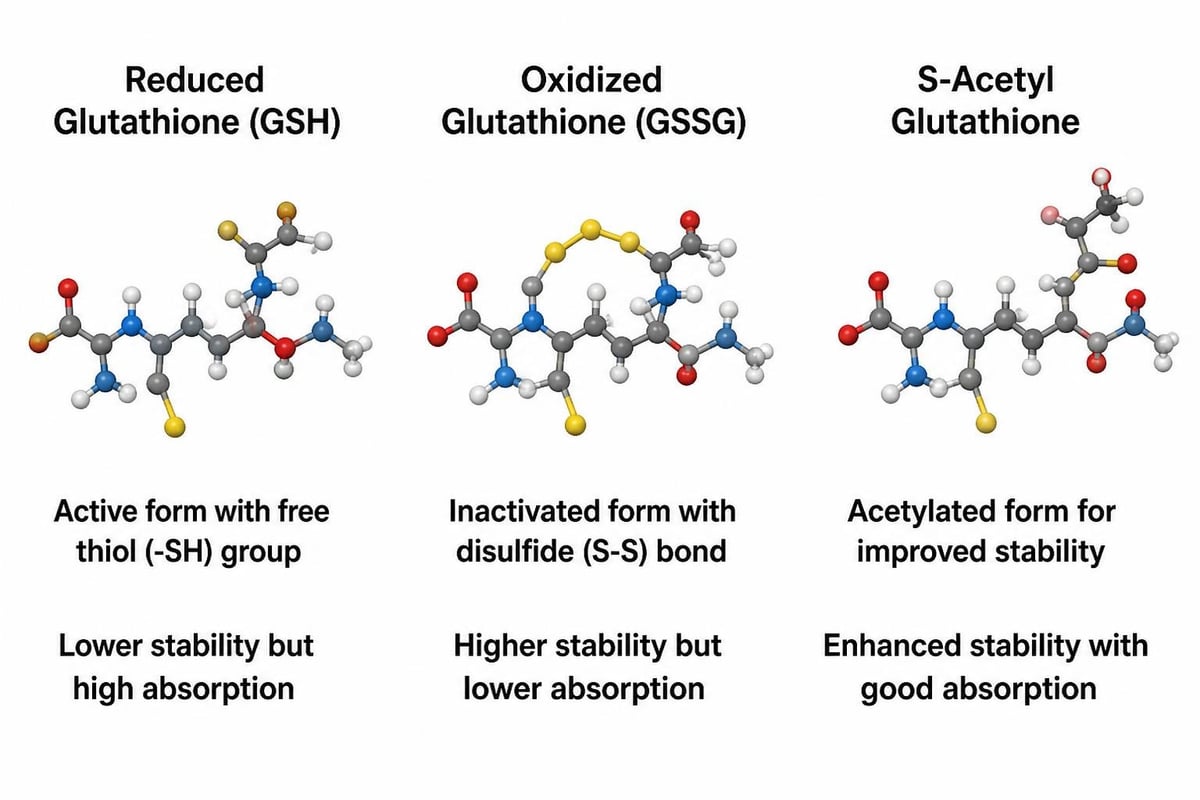
Gluta powder represents a family of glutathione-based ingredients available in multiple molecular forms, each with distinct characteristics that affect bioavailability, stability, and application suitability. The most common forms include reduced glutathione (GSH), oxidized glutathione (GSSG), and chemically modified derivatives designed to improve absorption.
Primary Glutathione Formats in Powder Form
Reduced Glutathione (GSH) is the active, biologically relevant form consisting of three amino acids: glutamic acid, cysteine, and glycine. This tripeptide exists naturally in human cells and serves as the body's primary intracellular antioxidant. Bulk powder suppliers typically offer purity grades ranging from 95% to 99%, with pharmaceutical-grade material commanding premium pricing.
S-Acetyl Glutathione represents a modified form where an acetyl group attaches to the sulfur atom of the cysteine residue. This modification enhances stability and allows the molecule to cross cell membranes more efficiently. The European Commission has evaluated S-acetyl glutathione as a novel food ingredient, providing regulatory clarity for importers targeting European markets.
Liposomal Glutathione Powder incorporates the active ingredient within phospholipid vesicles, dramatically improving intestinal absorption. While technically more complex and expensive to manufacture, this format addresses the bioavailability limitations that affect standard glutathione supplementation. Importers should verify that suppliers provide documentation confirming true liposomal encapsulation rather than simple phospholipid blends.
| Glutathione Form | Typical Purity | Stability | Relative Cost | Primary Application |
|---|---|---|---|---|
| Reduced GSH | 98-99% | Moderate | Baseline | General supplements |
| S-Acetyl GSH | 95-98% | High | 150-200% | Premium formulations |
| Liposomal GSH | 20-30% active | Very High | 300-400% | Enhanced absorption products |
| Oxidized GSSG | 95-98% | High | 80-100% | Topical applications |
Quality Standards and Testing Requirements for Wholesale Buyers
International buyers sourcing gluta powder must establish rigorous quality verification protocols to ensure product safety, efficacy, and regulatory compliance across destination markets. The supplement industry's reputation challenges make third-party testing non-negotiable for responsible importers.
Essential Quality Parameters
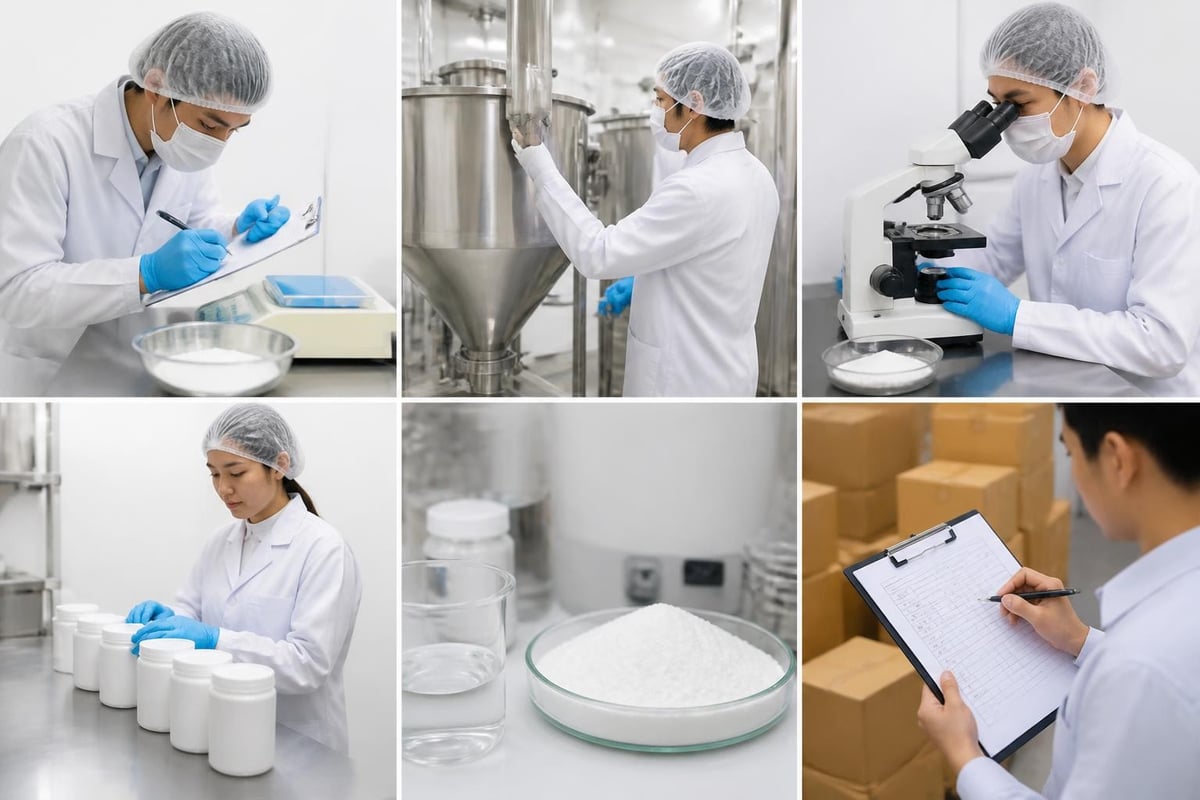
Purity and Identity Verification forms the foundation of quality assessment. High-performance liquid chromatography (HPLC) remains the gold standard for confirming glutathione content and detecting adulterants. Reputable Thai suppliers provide certificates of analysis (CoA) from accredited laboratories showing minimum 98% purity for pharmaceutical-grade material.
Heavy Metal Screening addresses contamination risks inherent in amino acid production. Testing should cover lead, cadmium, mercury, and arsenic, with limits conforming to USP or EU Pharmacopeia standards. Thai manufacturers implementing good manufacturing practices (GMP) routinely test each production batch to maintain export quality standards.
- Microbiological testing: total plate count, yeast/mold, E. coli, Salmonella
- Residual solvents analysis for fermentation-derived glutathione
- Particle size distribution for powder flowability and formulation consistency
- Moisture content verification to prevent degradation during storage and shipping
- Assay for related substances and impurity profiling
Thailand's position as a major exporter of Thai beauty and personal care products has driven investment in analytical capabilities, with many contract manufacturers maintaining ISO 17025-accredited testing facilities that support international quality requirements.
Stability and Shelf Life Considerations
Glutathione's susceptibility to oxidation requires careful attention to packaging and storage conditions throughout the supply chain. Bulk gluta powder should arrive in multi-layer aluminum foil bags with nitrogen flushing to minimize oxygen exposure. Importers should request stability data demonstrating maintenance of potency under controlled temperature and humidity conditions.
Temperature management during international shipping presents a particular challenge for reduced glutathione, which degrades more rapidly at elevated temperatures. Wholesalers serving tropical markets should consider S-acetyl or liposomal forms that demonstrate superior heat stability, though at higher cost points.
Regulatory Landscape for International Markets
The regulatory classification of gluta powder varies significantly across international markets, creating complexity for importers developing multi-country distribution strategies. Understanding these distinctions prevents costly shipment rejections and compliance violations.
Regional Regulatory Frameworks
United States Market: The FDA regulates glutathione as a dietary ingredient under the Dietary Supplement Health and Education Act (DSHEA). Importers can market products without pre-market approval, but must comply with current good manufacturing practices (cGMP) and avoid disease claims. The agency has issued warning letters to companies making unapproved therapeutic claims about glutathione's skin-lightening effects.
European Union: Glutathione products fall under food supplement regulations in most EU member states, though some forms like S-acetyl glutathione require novel food authorization. Importers must verify that their specific formulation complies with the destination country's supplement regulations and maximum permitted doses.
Asian Markets: Japan classifies glutathione as a food additive and supplement ingredient with established use history. South Korea permits glutathione in health functional foods with specific claim parameters. Each Southeast Asian nation maintains distinct import requirements that wholesalers must navigate.
The clinical evidence base for oral glutathione supplementation continues to expand, though regulatory bodies maintain conservative positions on permissible health claims. International buyers should work with regulatory consultants when developing product labeling for multiple markets.
Manufacturing Sources and Thailand's Role in Global Supply
The global gluta powder supply chain centers on fermentation-based production in Asia, with Thailand emerging as a significant hub for finished product manufacturing and export. Understanding the production landscape helps importers identify reliable partners and negotiate competitive terms.
Production Methods and Regional Strengths
Fermentation Technology dominates modern glutathione production, using genetically optimized yeast strains to produce the tripeptide through cellular metabolism. This biotechnology approach has largely replaced chemical synthesis, offering superior purity and reduced environmental impact. Major fermentation facilities operate in Japan, China, and increasingly in Thailand, where manufacturers have invested in modern bioreactor capacity.
Thai Manufacturing Advantages include established expertise in natural product processing, competitive labor costs compared to developed markets, and robust export infrastructure. The country's botanical extract industry has created a skilled workforce and quality systems that transfer effectively to amino acid and peptide production. Thailand's pharmaceutical manufacturing sector operates under regulatory oversight that ensures GMP compliance for export products.
Several Thai manufacturers have integrated forward into finished supplement production, offering importers turnkey solutions from raw material to retail-ready packaging. These vertically integrated operations provide greater supply chain control and often superior pricing for volume buyers compared to multi-tiered sourcing models.
- Contract manufacturing capabilities for private label development
- Blending and formulation services combining glutathione with complementary ingredients
- Softgel, tablet, and powder sachet production under one roof
- Export documentation support and regulatory compliance assistance
- Flexible minimum order quantities accommodating market testing
International buyers exploring Thai product sourcing services benefit from Thailand's established position in the wellness ingredient ecosystem, with access to competitive pricing while maintaining quality standards expected in developed markets.
Formulation Strategies and Product Development
Importers and brand owners developing glutathione-based products face formulation challenges related to stability, bioavailability, and ingredient interactions. Understanding these technical considerations enables better specification development and supplier communication.
Bioavailability Enhancement Approaches
The pharmaceutical literature demonstrates that unmodified reduced glutathione shows limited oral bioavailability due to enzymatic breakdown in the digestive tract. A comprehensive systematic review on glutathione in skin aging examines various delivery strategies and their clinical outcomes, providing evidence-based guidance for formulation decisions.
Combination Formulations represent the most common commercial approach, pairing gluta powder with ingredients that support endogenous glutathione synthesis or provide complementary antioxidant activity:
- Vitamin C (ascorbic acid): Regenerates oxidized glutathione back to its reduced form
- N-Acetyl Cysteine (NAC): Provides the rate-limiting cysteine precursor for glutathione synthesis
- Alpha-lipoic acid: Supports mitochondrial glutathione recycling
- Selenium: Essential cofactor for glutathione peroxidase enzymes
- Vitamin E: Works synergistically with glutathione in lipid peroxidation prevention
Delivery System Innovation has produced several patented technologies claiming improved bioavailability. While liposomal encapsulation shows the strongest scientific support, sublingual formats, time-release matrices, and enteric coatings also appear in commercial products. Importers should request clinical data or bioavailability studies supporting any proprietary delivery claims.
Market Applications and Consumer Demand Drivers
The gluta powder market serves multiple end-use categories, each with distinct formulation requirements, price sensitivities, and growth trajectories. Importers benefit from understanding demand drivers to optimize product portfolio decisions.
Skin Brightening and Cosmetic Wellness
Glutathione's popularity in Asian markets stems primarily from its reputation as a skin-lightening agent, though scientific evidence for this application remains mixed. A systematic review on glutathione as a skin-lightening agent published in the International Journal of Dermatology evaluates efficacy and safety data, revealing heterogeneous study quality and outcomes.
Despite regulatory restrictions in some markets, demand for oral glutathione products marketed for skin health continues growing across Southeast Asia, the Middle East, and increasingly in Western markets. Products typically combine 500-1000mg of glutathione with vitamin C and botanical extracts positioned as beauty-from-within supplements.
Antioxidant and General Wellness Products
Western markets demonstrate increasing interest in glutathione for its fundamental antioxidant role and potential benefits in aging, athletic recovery, and metabolic health. These formulations typically emphasize cellular protection, detoxification support, and immune function rather than cosmetic outcomes.
Target consumer segments for antioxidant-focused glutathione products include:
- Health-conscious consumers seeking comprehensive antioxidant protection
- Athletes and fitness enthusiasts interested in recovery optimization
- Aging populations concerned with cellular health and longevity
- Individuals with exposure to environmental toxins or oxidative stress
The ConsumerLab review of glutathione supplements provides independent quality testing results and evidence summaries that inform consumer purchasing decisions, highlighting the importance of third-party verification for building brand credibility.
Sourcing Considerations for International Buyers
Successful gluta powder importation requires careful supplier evaluation, clear specification development, and proactive supply chain management. Experienced international buyers apply systematic approaches to minimize risk and ensure consistent quality.
Supplier Qualification Framework
Manufacturing Credentials provide the first filter in supplier assessment. International buyers should prioritize facilities with relevant certifications including GMP for food supplements, ISO 22000 for food safety management, HACCP implementation, and ideally FDA registration for suppliers targeting U.S. markets.
Production Capacity and Scalability matter particularly for growing brands. Importers should verify monthly production volumes, lead times, and flexibility to accommodate order increases. Thai manufacturers often demonstrate greater agility than larger Chinese facilities, though at potentially higher per-unit costs for commodity-grade material.
| Evaluation Criterion | Critical Factors | Verification Method |
|---|---|---|
| Quality Systems | GMP, ISO certifications, testing capabilities | Audit reports, certificate review |
| Technical Expertise | Formulation support, stability data, documentation | Technical discussions, sample evaluation |
| Regulatory Compliance | Export licenses, CoA format, claim substantiation | Document review, reference checks |
| Commercial Terms | MOQ, payment terms, lead times, pricing structure | Quotation analysis, negotiation |
| Communication | Responsiveness, English proficiency, transparency | Ongoing interaction assessment |
Sample Testing and Verification Protocol
Before committing to volume orders, importers should implement a structured sample evaluation process. Request samples with full CoA documentation, then submit material to an independent laboratory for verification testing. Compare supplier-provided analytical results against third-party findings to assess reliability.
Key sample evaluation steps:
- Request 100-500g sample with current batch CoA
- Submit sample for independent HPLC purity analysis
- Conduct heavy metal screening through accredited lab
- Perform microbiological testing if intended for food/supplement use
- Evaluate physical characteristics: color, odor, particle size, flowability
- Small-scale formulation trials if developing finished products
- Accelerated stability testing under stress conditions
Thailand's growing role in personal care and wellness product export has created a sophisticated supplier ecosystem. Buyers can connect with qualified manufacturers through trade associations, industry exhibitions, or specialized sourcing services that pre-vet suppliers against international quality standards.
Pricing Dynamics and Commercial Considerations
Gluta powder pricing reflects multiple variables including molecular form, purity grade, order volume, and supplier positioning. International buyers benefit from understanding market pricing structures to negotiate effectively and budget accurately.
Price Influencing Factors
Raw material form creates the most significant price differential. Commodity-grade reduced glutathione (98% purity) from Chinese manufacturers trades at baseline pricing, while S-acetyl glutathione commands 150-200% premiums due to additional synthesis steps and intellectual property considerations. Liposomal formulations price at 300-400% of baseline due to phospholipid costs and specialized processing requirements.
Order volume thresholds dramatically affect unit economics. Minimum order quantities typically start at 25kg for reduced glutathione, with meaningful price breaks at 100kg, 500kg, and 1,000kg levels. Thai manufacturers often accommodate smaller initial orders than larger Chinese facilities, supporting market testing before full-scale commitment.
Value-added services including custom formulation, finished product manufacturing, and private labeling add costs but may deliver superior net margins for importers compared to handling these functions separately. Integrated Thai suppliers offering turnkey solutions from powder to packaged product increasingly compete on total landed cost rather than ingredient pricing alone.
Payment terms and logistics considerations affect working capital requirements. Standard terms involve 30% deposit with balance against bill of lading, though established relationships may negotiate extended payment periods. Shipping costs vary with volume, with 25kg orders facing disproportionate freight impacts compared to full container loads.
Storage, Handling, and Distribution Best Practices
Maintaining gluta powder quality through the distribution chain requires attention to environmental controls and handling procedures. Importers should establish protocols that preserve product integrity from receipt through final customer delivery.
Optimal Storage Conditions
Temperature control stands as the primary preservation factor. Ideal storage maintains 15-25°C (59-77°F) with minimal fluctuation. Facilities in tropical climates should utilize climate-controlled warehouses rather than ambient storage, particularly for reduced glutathione and finished products containing the ingredient.
Humidity management prevents moisture absorption that accelerates oxidation and microbial growth. Storage areas should maintain relative humidity below 60%, with desiccant packs included in package resealing after sampling or partial use.
- Store in original sealed packaging until use
- Reseal opened packages immediately with nitrogen flushing if possible
- Keep away from direct sunlight and heat sources
- Separate from strong oxidizing agents and incompatible materials
- Implement first-in-first-out (FIFO) inventory rotation
- Monitor storage conditions with temperature/humidity logging
Handling Procedures for Quality Preservation
Personnel handling bulk gluta powder should follow basic hygiene and contamination prevention protocols. While glutathione poses minimal safety hazards, maintaining product purity requires clean equipment, appropriate personal protective equipment, and designated utensils to prevent cross-contamination.
Repackaging operations for wholesalers serving smaller buyers should occur in controlled environments with appropriate particulate controls. Nitrogen flushing of repackaged units extends shelf life by minimizing oxygen exposure that drives glutathione oxidation.
Applications Beyond Oral Supplements
While dietary supplements dominate gluta powder consumption, alternative applications create additional market opportunities for importers with diverse customer bases or vertical integration strategies.
Cosmetic and Topical Formulations
Topical glutathione applications in skincare products have gained traction despite limited penetration of the intact molecule through the stratum corneum. Cosmetic formulators incorporate glutathione into serums, creams, and masks, often combining with penetration enhancers or using derivative forms with improved skin absorption.
Formulation challenges in topical applications include maintaining stability in water-based systems, preventing oxidation during product shelf life, and achieving meaningful skin delivery. Oxidized glutathione (GSSG) demonstrates superior stability in cosmetic formulations compared to reduced forms, though with potentially different biological activity profiles.
Functional Food and Beverage Applications
Several markets permit glutathione addition to foods and beverages, creating opportunities for functional product development. Japan's long history of glutathione use in food products provides regulatory precedent, while newer markets show growing acceptance.
Application examples include beauty beverages, functional jellies, effervescent tablets, and nutrient-enhanced waters. Formulators must address glutathione's intrinsic taste characteristics and stability in various pH and temperature conditions during processing and storage.
Understanding the technical, regulatory, and commercial landscape surrounding gluta powder enables international buyers to source effectively, develop competitive products, and serve growing market demand across multiple applications. Whether importing bulk material for distribution, developing private label supplements, or sourcing finished products, success requires supplier partnerships that deliver consistent quality, regulatory compliance, and responsive service. BUARADA connects international buyers with qualified Thai suppliers and manufacturers specializing in wellness ingredients and finished products, offering sourcing support, quality verification, and export solutions tailored to your specific requirements.