
The global skin supplement market continues to experience substantial growth as consumers increasingly seek ingestible solutions for skin health and appearance. For international wholesalers, distributors, importers, and retailers, understanding this product category presents significant commercial opportunities. A skin supplement delivers targeted nutrients through oral consumption, working internally to support skin health through various mechanisms including collagen production, antioxidant protection, hydration support, and cellular repair. This guide examines the essential aspects of skin supplements from a B2B sourcing perspective, focusing on ingredients, formulations, quality considerations, and market opportunities for businesses seeking to source these products from Thailand and other Asian markets.
Understanding Skin Supplement Formulations and Active Ingredients
Skin supplement formulations typically contain specific combinations of vitamins, minerals, botanicals, amino acids, and other bioactive compounds designed to address particular skin concerns. The most common active ingredients include collagen peptides, hyaluronic acid, vitamin C, vitamin E, biotin, and various antioxidants.
Collagen-based formulations represent the largest segment within the skin supplement category. These products typically contain hydrolyzed collagen peptides with molecular weights optimized for absorption. Marine collagen, bovine collagen, and porcine collagen each offer different amino acid profiles and appeal to different market segments.
Vitamin and mineral combinations serve as foundational elements in many skin supplement products. Research on trace element zinc and skin disorders demonstrates the clinical importance of proper mineral supplementation for skin health, particularly for inflammatory conditions and wound healing.
Key Ingredient Categories for Procurement
| Ingredient Type | Primary Function | Common Sources | Market Positioning |
|---|---|---|---|
| Collagen Peptides | Structural support, hydration | Marine, bovine, porcine | Premium anti-aging |
| Hyaluronic Acid | Moisture retention | Fermentation-derived | Hydration focus |
| Antioxidants | Free radical protection | Botanical extracts, vitamins | Protective wellness |
| Probiotics | Gut-skin axis support | Lactobacillus, Bifidobacterium strains | Holistic health |
| Plant Extracts | Targeted benefits | Herbs, fruits, botanicals | Natural positioning |
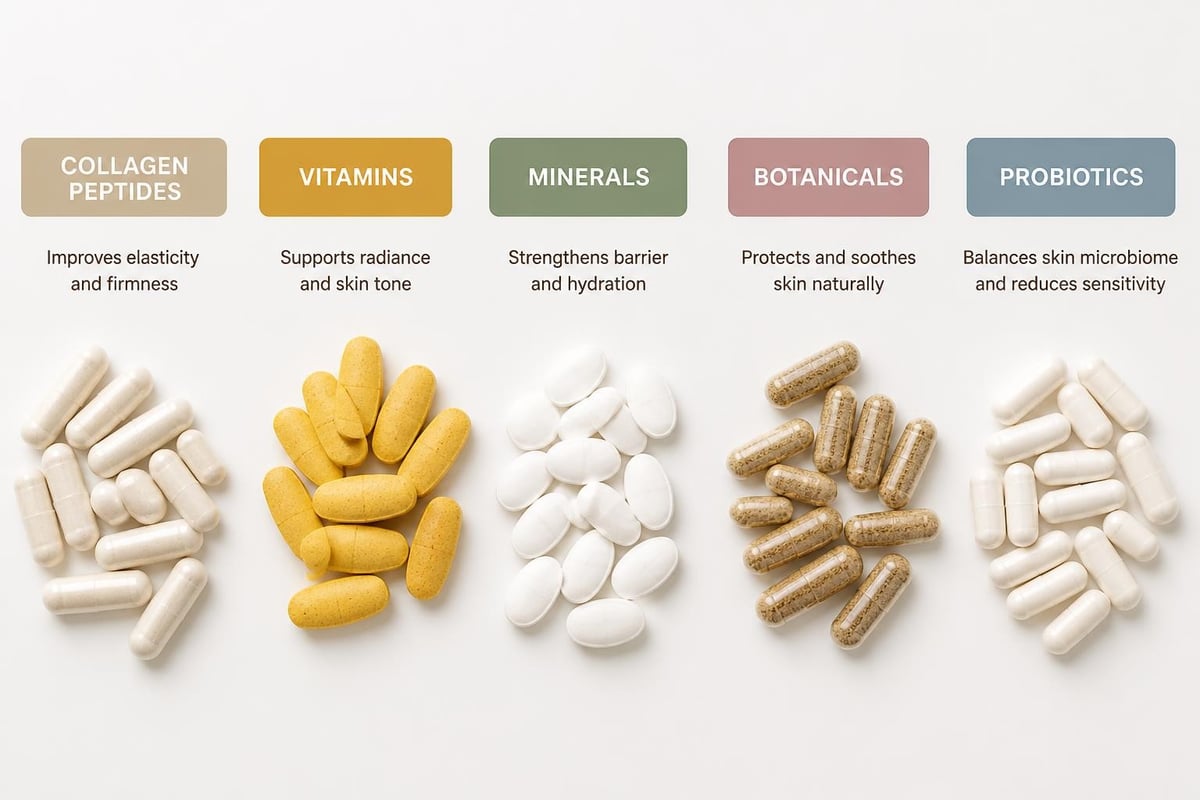
Botanical ingredients add differentiation potential and appeal to consumers seeking natural formulations. Thailand produces numerous traditional herbs and plant extracts with documented skin benefits, creating opportunities for buyers seeking authentic Asian botanical ingredients. When sourcing skin supplement products with herbal components, international buyers should verify botanical identification, extraction methods, and standardization levels.
Probiotics and the Gut-Skin Connection
The relationship between digestive health and skin appearance has emerged as a significant focus within skin supplement development. Evidence examining probiotics and the gut-skin axis demonstrates that specific probiotic strains may influence skin health through multiple pathways including immune modulation, inflammation reduction, and barrier function enhancement.
For B2B buyers, probiotic skin supplements present several considerations:
- Strain specificity: Different bacterial strains offer distinct benefits
- Colony forming units (CFU): Dosage levels impact efficacy and cost
- Stability requirements: Temperature-sensitive products require cold chain logistics
- Regulatory variations: Probiotic classifications differ across markets
- Shelf life: Time-temperature exposure affects viability
Sourcing Probiotic Formulations
International importers evaluating probiotic skin supplement suppliers should request documentation regarding strain identification, stability testing data, and manufacturing conditions. Reputable manufacturers provide certificates of analysis confirming viable cell counts throughout the product shelf life.
Thailand has developed capabilities in probiotic research and production, particularly for fermented food-based strains. Businesses exploring Thai Health & Wellness Products may find opportunities in traditional fermented ingredients adapted for modern supplement applications.
Quality Standards and Certifications for International Trade
Quality assurance represents a critical consideration when sourcing skin supplement products for international markets. Buyers must evaluate suppliers based on manufacturing standards, testing protocols, and regulatory compliance capabilities.
Good Manufacturing Practice (GMP) certification serves as a fundamental requirement for reputable supplement manufacturers. GMP compliance ensures consistent production processes, quality control systems, and documentation practices. International buyers should specifically request evidence of GMP certification relevant to their target markets.
Testing and verification protocols include:
- Raw material identification testing – Confirms ingredient authenticity
- Microbial contamination screening – Ensures product safety
- Heavy metal testing – Critical for botanical ingredients
- Active ingredient quantification – Verifies label claims
- Stability testing – Establishes shelf life parameters
Regulatory requirements vary significantly across markets. Products acceptable in Southeast Asian markets may require reformulation or additional testing for European Union or United States import. Forward-thinking distributors work with suppliers capable of adapting formulations to meet specific market requirements.

Market Segments and Product Positioning Strategies
The skin supplement market encompasses multiple consumer segments, each with distinct preferences, purchasing behaviors, and price sensitivities. Understanding these segments enables more effective product selection and market positioning.
| Market Segment | Primary Concerns | Preferred Formats | Price Sensitivity | Distribution Channels |
|---|---|---|---|---|
| Anti-aging | Wrinkles, firmness, elasticity | Capsules, powders | Medium to low | Premium retail, direct-to-consumer |
| Acne/Problem Skin | Inflammation, breakouts, scarring | Tablets, capsules | Medium | Pharmacy, specialty retail |
| General Wellness | Overall appearance, prevention | Multiple formats | Medium to high | Mass retail, online marketplaces |
| Professional/Clinical | Medical-grade results | Capsules, liquids | Low | Medical channels, specialty |
| Natural/Organic | Clean ingredients, sustainability | Powders, capsules | Medium | Health stores, online |
Research on oral nutraceuticals for treating acne provides evidence-based insights for products targeting inflammatory skin conditions, an important segment for specialized retailers and pharmacy distribution.
Format and Delivery System Considerations
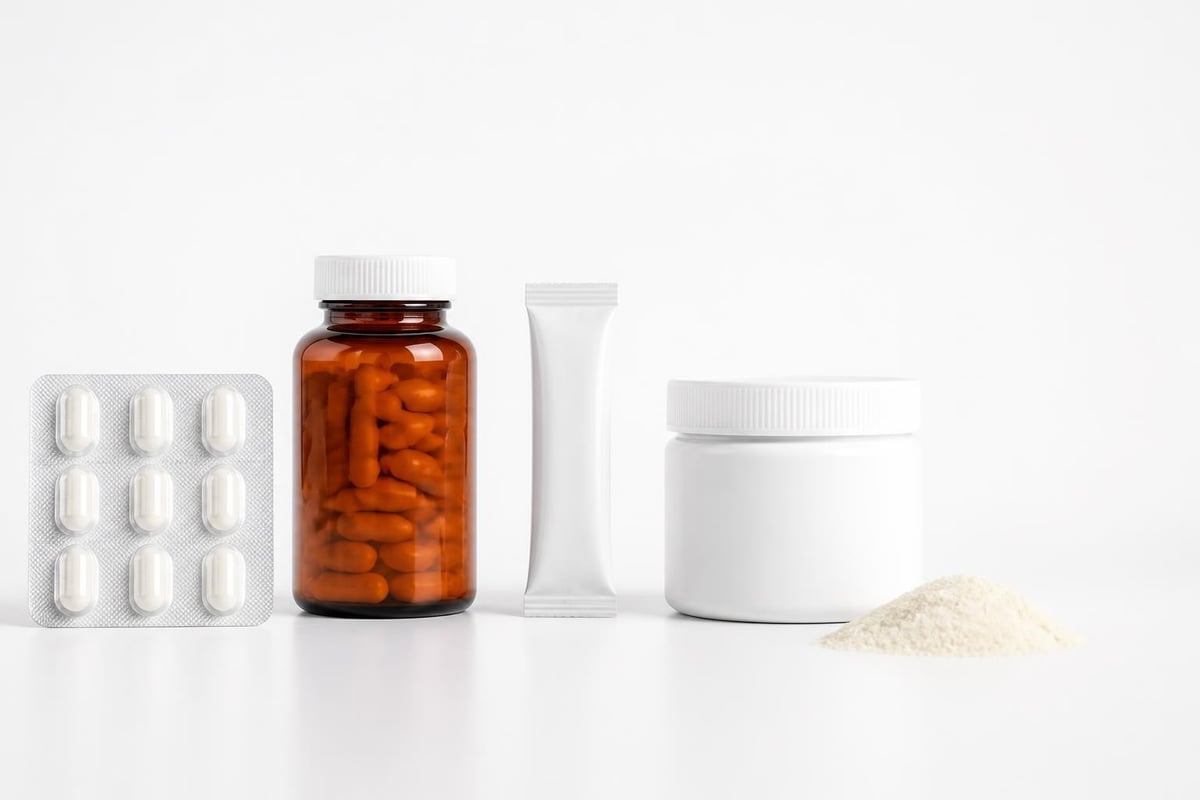
Skin supplement products appear in various formats, each offering different advantages for manufacturers, distributors, and end consumers. Capsules provide convenience and precise dosing but require specialized encapsulation equipment. Powder formats allow flexible dosing and easier customization but may present palatability challenges. Liquid formulations offer rapid absorption potential but typically command higher production costs and face shelf stability considerations.
Wholesalers should evaluate format selection based on target market preferences, logistics requirements, and competitive positioning. Asian markets often show strong acceptance of powder formats mixed into beverages, while Western markets typically prefer capsule or tablet presentations.
Sourcing Skin Supplements from Thailand and Asian Suppliers
Thailand has established itself as a significant production hub for health and wellness products, including various skin supplement formulations. The country offers several advantages for international buyers seeking reliable Asian suppliers.
Manufacturing capabilities in Thailand span from large-scale contract manufacturers serving international brands to specialized producers focusing on traditional botanical ingredients. The Thai FDA regulates supplement production, providing a regulatory framework that facilitates quality assurance while maintaining competitive production costs.
When evaluating Thai suppliers for skin supplement sourcing, buyers should consider:
- Manufacturing facility certifications and audit history
- Minimum order quantities (MOQ) and production lead times
- Formulation development and customization capabilities
- Export documentation and logistics support
- Ingredient sourcing transparency and traceability
- Intellectual property protection measures
Thailand's botanical diversity provides access to unique herbal ingredients with traditional use histories in skin health applications. Turmeric, mangosteen, butterfly pea, and various traditional Thai herbs appear in modern skin supplement formulations, offering product differentiation opportunities for international brands.
Working with Thai Product Exporters
Establishing relationships with established Thai product exporters can streamline the sourcing process for international buyers new to the market. Experienced exporters understand international shipping requirements, documentation procedures, and quality expectations for various destination markets.
Buyers should request samples, certificates of analysis, and manufacturing facility information before committing to large orders. Site visits to manufacturing facilities, while requiring investment, provide valuable insights into production capabilities and quality control systems.
Private Label and White Label Opportunities
Private label skin supplement manufacturing represents a significant opportunity for distributors, retailers, and brands seeking to enter or expand within the category. Contract manufacturers in Thailand and throughout Asia offer various service levels from simple white label products to comprehensive private label development.
White label products provide the fastest market entry path. Buyers select from existing formulations and apply their branding to finished products. This approach minimizes development time and initial investment but offers limited differentiation potential.
Private label development involves custom formulation creation aligned with brand positioning and target market requirements. This approach requires higher initial investment and longer development timelines but enables unique product positioning and competitive advantages.
Key considerations for private label projects include:
- Formulation development timeline – Typically 3-6 months for new formulations
- Regulatory compliance review – Target market requirements must inform formulation
- Stability and compatibility testing – Ensures ingredient interactions don't compromise efficacy
- Packaging development – Container selection impacts product stability and shelf appeal
- Artwork and labeling compliance – Regulatory requirements vary by market
Experienced contract manufacturers guide buyers through formulation selection, testing protocols, and regulatory compliance requirements. Transparent communication regarding capabilities, limitations, and timelines establishes realistic expectations and successful partnerships.
Packaging Formats and Shelf Life Considerations
Packaging decisions significantly impact skin supplement product performance, consumer appeal, and distribution economics. Primary packaging must protect ingredients from moisture, oxygen, light, and temperature fluctuations while meeting regulatory labeling requirements and appealing to target consumers.
Blister packaging provides excellent moisture and oxygen protection, extends shelf life, and offers tamper-evident security. However, blister packs typically cost more per unit than bottle packaging and generate more packaging waste.
Bottle packaging with appropriate closures serves as the most common format for capsule and tablet products. HDPE bottles with induction seals and desiccant packets provide adequate protection for most formulations at competitive costs.
Stability and Shelf Life Testing
Responsible manufacturers conduct stability testing under various temperature and humidity conditions to establish accurate expiration dating. International buyers should request stability data demonstrating that products maintain potency and safety throughout the claimed shelf life under expected storage and distribution conditions.
Accelerated stability testing predicts long-term stability by exposing products to elevated temperature and humidity. Real-time stability studies validate accelerated testing predictions and satisfy regulatory requirements in many markets.
Commercial Terms and Import Considerations
Successful skin supplement sourcing requires understanding commercial terms, payment structures, and import procedures for international trade. Buyers should establish clear terms covering pricing, payment schedules, quality specifications, delivery timelines, and dispute resolution procedures.
Incoterms define responsibilities for shipping, insurance, and customs clearance. FOB (Free on Board) places responsibility on buyers once products leave the origin port, while CIF (Cost, Insurance, and Freight) includes shipping and insurance to the destination port in the supplier's quoted price.
Payment terms vary based on supplier relationships and order values:
- Letter of Credit (LC): Provides security for both parties through bank guarantees
- Telegraphic Transfer (TT): Direct bank transfers, often structured as deposit plus balance
- Documentary Collection: Bank-mediated payment upon document presentation
- Open Account: Extended payment terms for established relationships
Import duties, taxes, and regulatory clearance requirements vary by destination country and product classification. Harmonized System (HS) codes determine applicable duty rates. Skin supplements typically classify under HS codes in the 2106 or 3004 categories depending on formulation and health claims, but classification should be verified with customs authorities in destination markets.
Regulatory Compliance Across International Markets
Regulatory requirements for skin supplement products vary substantially across global markets. Products legally marketed in Thailand may require reformulation, additional testing, or different labeling to meet requirements in European Union countries, the United States, Japan, or other destination markets.
European Union regulations classify skin supplements as food supplements, subject to food safety regulations and specific directives regarding vitamins, minerals, and novel foods. Maximum permitted levels for certain nutrients apply, and health claims require substantiation and approval.
United States regulations under FDA oversight classify most skin supplements as dietary supplements under DSHEA. Manufacturers must follow Current Good Manufacturing Practice (cGMP) requirements, and products must not make disease treatment claims without drug approval.
ASEAN markets including Thailand, Indonesia, Malaysia, and others maintain individual national regulations while working toward harmonization. Understanding specific requirements in target markets prevents costly reformulation or regulatory delays.
International buyers should work with suppliers who understand these regulatory differences and can provide documentation supporting compliance in target markets. Investing in regulatory consultation early in the sourcing process prevents expensive mistakes and market entry delays.
Market Trends Shaping Skin Supplement Demand
Several trends continue shaping skin supplement market dynamics and creating opportunities for forward-thinking buyers and distributors. Understanding these trends enables more strategic product selection and positioning.
Personalization and customization represent growing consumer expectations. Some brands offer customized formulations based on skin type assessments or genetic testing, while others provide modular systems allowing consumers to combine products based on specific concerns.
Sustainability and transparency influence purchasing decisions, particularly among younger consumers. Products featuring sustainably sourced ingredients, minimal packaging, and supply chain transparency gain market traction. Thai suppliers emphasizing organic farming, fair trade practices, and environmental responsibility align with these consumer values.
Science-backed formulations with clinical evidence gain credibility advantages over products making unsupported claims. Buyers seeking premium positioning should prioritize suppliers willing to invest in efficacy studies and transparent ingredient documentation.
Convenience formats including ready-to-drink beverages, gummies, and single-serving sachets appeal to consumers seeking simplified supplementation routines. While these formats often carry higher production costs, they can command premium pricing and strong consumer loyalty.
The intersection of beauty and wellness continues blurring category boundaries. Products positioned at this intersection, combining skin benefits with overall health support, access broader consumer segments and distribution channels.
Evaluating Supplier Reliability and Partnership Potential
Supplier selection represents one of the most consequential decisions in skin supplement sourcing. Beyond product quality and pricing, long-term success depends on supplier reliability, communication quality, and partnership orientation.
Critical evaluation criteria include:
- Financial stability: Established suppliers with sound finances provide continuity assurance
- Production capacity: Adequate capacity prevents supply disruptions during demand growth
- Quality systems: Documented quality management systems ensure consistent standards
- Communication responsiveness: Timely, clear communication prevents misunderstandings
- Problem-solving approach: How suppliers handle issues reveals partnership potential
- Innovation capability: Development resources support product evolution and market adaptation
Reference checks with existing customers provide insights into supplier performance and reliability. International buyers should specifically inquire about delivery reliability, quality consistency, and how suppliers handle problems or disputes.
Site audits, either conducted directly or through third-party auditors, verify manufacturing conditions and quality systems. While requiring investment, audits provide confidence and often reveal important information not apparent from documentation review alone.
Logistics and Distribution Planning
Effective logistics planning ensures skin supplement products reach destination markets in optimal condition while managing costs and meeting delivery commitments. Several factors require consideration in logistics strategy development.
Shipping methods balance speed and cost. Air freight delivers products quickly but costs significantly more than ocean shipping. Ocean freight offers economical transportation for larger volumes but requires longer lead times and may expose products to greater temperature variation.
Temperature control becomes critical for products containing probiotics or ingredients sensitive to heat exposure. Refrigerated containers or temperature-controlled logistics add costs but protect product integrity and prevent potency loss.
Consolidation strategies allow smaller buyers to achieve better freight rates by combining shipments. Some Thai exporters offer consolidation services, combining products from multiple buyers into efficient container shipments.
Customs clearance requires accurate documentation including commercial invoices, packing lists, certificates of origin, and certificates of analysis. Working with experienced freight forwarders and customs brokers streamlines clearance and reduces delay risks.
Building Sustainable Supply Relationships
Long-term success in skin supplement distribution depends on developing sustainable, mutually beneficial supplier relationships rather than pursuing only short-term price advantages. Strategic partnerships enable better communication, priority treatment during supply constraints, and collaborative product development.
Relationship-building practices include:
- Regular communication beyond order placement and problem resolution
- Fair negotiation seeking win-win outcomes rather than extracting maximum concessions
- Prompt payment according to agreed terms builds trust and preferential treatment
- Realistic expectations regarding pricing, minimums, and lead times
- Collaborative forecasting helping suppliers plan production and raw material procurement
- Quality feedback providing constructive information that helps suppliers improve
Many successful importers maintain relationships with multiple suppliers to ensure supply continuity and competitive tension while concentrating sufficient volume with each to receive priority treatment and competitive pricing.
Strategic sourcing of skin supplement products requires evaluating formulations, quality systems, regulatory compliance, and supplier capabilities while understanding market trends and target consumer preferences. Thailand offers compelling opportunities for international buyers seeking quality products, competitive pricing, and unique botanical ingredients backed by traditional use and modern manufacturing capabilities. Whether you're a wholesaler, distributor, retailer, or importer seeking reliable skin supplement sourcing from Thailand, BUARADA provides comprehensive export services, quality assurance, and international logistics support to connect your business with authentic Thai health and wellness products.