

Thailand's beauty and personal care industry has established itself as a major force in global skincare markets, combining traditional herbal wisdom with modern manufacturing capabilities. International buyers seeking authentic, quality-driven products increasingly turn to Thailand for sourcing opportunities. A reliable thai skincare supplier offers access to diverse product categories, from coconut-based formulations to herbal remedies, backed by established export infrastructure and competitive manufacturing costs.
The country's strategic position in Southeast Asia, coupled with strong governmental support for trade promotion through agencies like the Department of International Trade Promotion, creates favorable conditions for B2B partnerships. Understanding how to identify and work with Thai suppliers requires knowledge of regulatory frameworks, quality standards, and market dynamics specific to this rapidly evolving sector.
Understanding Thailand's Skincare Manufacturing Landscape
Thailand's cosmetics and personal care manufacturing sector operates under strict regulatory oversight while maintaining flexibility for innovation. The Thai FDA requires manufacturers to comply with Good Manufacturing Practice (GMP) standards, and buyers can verify supplier credentials through the official cosmetics regulatory portal.
Product Categories from Thai Suppliers
Thai skincare manufacturers specialize in several distinct product categories that appeal to international markets:
- Natural and herbal formulations using traditional Thai ingredients like turmeric, rice bran, and tamarind
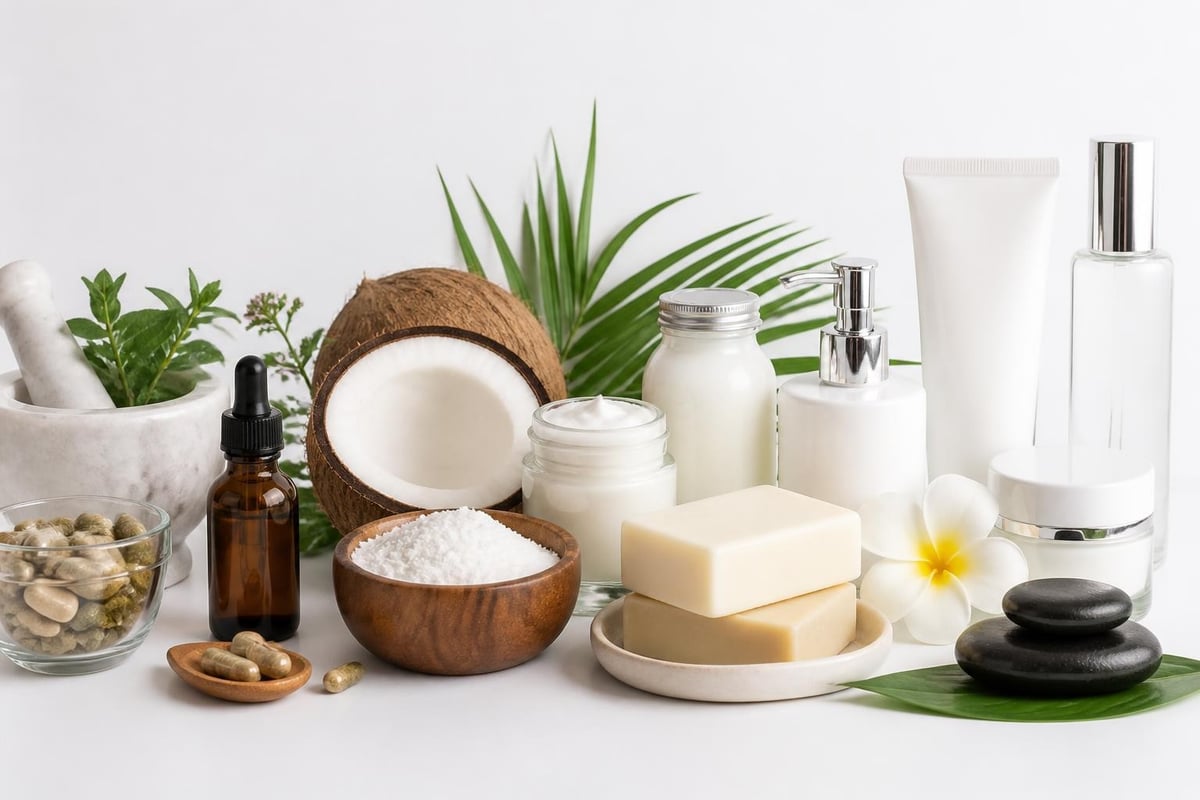
- Coconut-based products including virgin coconut oil skincare, body lotions, and hair treatments
- Whitening and brightening products featuring glutathione, collagen, and botanical extracts
- Spa and aromatherapy lines incorporating Thai massage oils and traditional wellness concepts
- Vegan and organic certified products meeting international clean beauty standards
The diversity of offerings allows importers to build comprehensive product portfolios. According to official trade statistics, Thailand exported significant volumes of beauty and skincare products globally, with major destinations including ASEAN nations, China, and Western markets.
Manufacturing Standards and Certifications
Quality assurance remains paramount when selecting a thai skincare supplier. Reputable manufacturers maintain multiple certifications:
| Certification Type | Purpose | Relevance for Importers |
|---|---|---|
| Thai FDA GMP | Manufacturing quality standards | Required for legal export |
| ISO 22716 | International cosmetic GMP | Demonstrates global compliance |
| HALAL Certification | Islamic compliance | Essential for Muslim-majority markets |
| Organic Certifications | Natural ingredient verification | Appeals to clean beauty segment |
| ASEAN Cosmetic Directive | Regional harmonization | Simplifies ASEAN distribution |
The ASEAN Consumer Information Handbook provides detailed guidance on labeling, safety requirements, and consumer protections that apply across member states, making Thai products particularly attractive for regional distribution strategies.
Sourcing Strategies for International Buyers
Identifying the right supplier partner requires systematic evaluation beyond basic price comparisons. International wholesalers and distributors should develop comprehensive sourcing criteria that balance cost efficiency with quality assurance and supply chain reliability.
Supplier Evaluation Framework
Initial screening criteria:
- Verify business registration and export license documentation
- Confirm manufacturing facility GMP certification status
- Review product portfolio alignment with target market requirements
- Assess minimum order quantities and production capacity
- Evaluate English communication capabilities and export experience
Quality verification steps:
- Request certificates of analysis for key products
- Obtain samples for independent laboratory testing
- Inspect ingredient sourcing and formulation transparency
- Review packaging options and customization capabilities
- Verify compliance with destination country regulations
Working with established Thai product exporters who understand international market requirements streamlines the sourcing process significantly. These experienced suppliers already navigate export documentation, shipping logistics, and regulatory compliance as core competencies.
Direct Manufacturer vs. Export Trading Company
International buyers face a strategic choice between sourcing directly from manufacturers or working through export-focused trading companies. Each approach offers distinct advantages:
Direct manufacturer relationships provide lower unit costs and direct communication with production teams but may require higher MOQs and involve more complex logistics coordination. Manufacturers often specialize in specific product categories, necessitating multiple supplier relationships for diverse portfolios.
Export trading companies like BUARADA aggregate products from multiple manufacturers, offering one-stop sourcing solutions with lower MOQs across diverse categories. These intermediaries handle quality control, export documentation, and shipping consolidation, reducing complexity for buyers new to Thai markets.

Product Development and Private Label Opportunities
Thailand's skincare manufacturing sector excels in private label and contract manufacturing arrangements. A capable thai skincare supplier provides formulation customization, packaging design, and brand development support for international partners.
Formulation Customization Options
Thai manufacturers offer flexible formulation development:
- Modification of existing formulas to meet specific market preferences
- Custom ingredient selection within established product platforms
- Adjustment of active ingredient concentrations
- Fragrance and color customization
- Texture and consistency modifications
Development timelines typically range from 30 to 90 days depending on complexity. Suppliers generally require formula approval and stability testing before proceeding to full production runs.
Packaging and Branding Services
| Service Category | Typical Options | Lead Time Considerations |
|---|---|---|
| Stock packaging | Standard bottles, jars, tubes | 2-4 weeks |
| Semi-custom packaging | Stock molds with custom printing | 4-8 weeks |
| Fully custom packaging | Unique molds and designs | 12-16 weeks |
| Labeling services | Multi-language label printing | 1-2 weeks |
| Secondary packaging | Gift sets, display boxes | 3-6 weeks |
Understanding how to source products from Thailand efficiently requires clear communication of packaging requirements early in the sourcing process, as tooling and mold creation represent significant time and cost investments.
Regulatory Compliance and Export Documentation
Navigating regulatory requirements represents a critical success factor in international skincare trade. Different destination markets impose varying registration, testing, and labeling requirements that affect product formulation and documentation.
Thai Export Requirements
Thailand's export framework for cosmetics and personal care products requires:
- Product registration with Thai FDA for certain categories
- Certificate of Free Sale (CFS) for destination countries requiring import verification
- Ingredient declaration and safety assessment documentation
- Proper HS code classification for customs clearance
- Export license for the shipping entity
Government resources including Thailand Public Relations Department market data provide insights into regulatory updates and industry growth projections that inform long-term sourcing strategies.
Destination Market Compliance
Key regulatory frameworks by region:
- EU markets: CPNP notification, Safety Assessment, and REACH compliance
- US markets: FDA registration, ingredient approval, and labeling requirements
- ASEAN markets: Harmonized ASEAN Cosmetic Directive compliance
- Middle East markets: HALAL certification and GCC standardization
- Australia/New Zealand: TGA notification and NICNAS compliance
A knowledgeable thai skincare supplier maintains current understanding of major market requirements and can adjust formulations or documentation accordingly. Buyers should request compliance documentation during the sampling phase to avoid costly reformulation after order placement.
Pricing Structure and Order Terms
Understanding cost components and standard business terms enables effective negotiation and accurate landed cost calculation. Thai skincare suppliers typically structure pricing based on product complexity, order volume, customization requirements, and packaging specifications.
Cost Components Breakdown
Base pricing factors include:
- Formulation complexity and ingredient costs
- Packaging materials and customization level
- Order quantity and production batch economics
- Quality testing and certification requirements
- Labeling and documentation services
Most suppliers offer tiered pricing with price breaks at specific volume thresholds. Initial orders generally command premium pricing compared to regular reorders, reflecting setup costs and smaller production batch inefficiencies.
Standard Payment and Order Terms
| Term Type | Typical Structure | Negotiation Factors |
|---|---|---|
| Payment terms | 30-50% deposit, balance before shipment | Relationship history, order size |
| Minimum order quantity | 500-5,000 units per SKU | Product type, customization level |
| Production lead time | 30-60 days post-approval | Complexity, seasonal demand |
| Sample policy | Paid samples, refundable on order | Established buyers may receive free samples |
| Price validity | 30-90 days | Raw material price volatility |
Importers focusing on Thai beauty products wholesale opportunities should anticipate initial relationship-building phases with conservative MOQs before scaling to container-load volumes that optimize shipping economics.
Logistics and Supply Chain Management
Efficient logistics planning significantly impacts total landed costs and inventory management. Thailand's well-developed export infrastructure supports both small parcel and container shipping, with multiple options for international buyers.
Shipping Methods and Timeframes
Air freight: Suitable for sample orders, urgent replenishment, or high-value lightweight products. Transit times range from 5-10 days to major markets with higher per-unit costs but lower minimum shipment requirements.
Sea freight: Standard for commercial wholesale orders, offering significantly lower per-unit costs. Full container loads (FCL) provide best economics, while less-than-container-load (LCL) accommodates smaller volumes. Transit times vary from 15-45 days depending on destination and routing.
Express courier: Ideal for urgent samples or small test orders under 100kg. Door-to-door service with 3-7 day delivery but premium pricing structures.
Incoterms and Responsibility Division
Understanding Incoterms clarifies cost and risk responsibilities between supplier and buyer:
- EXW (Ex Works): Buyer handles all logistics from supplier's facility
- FOB (Free on Board): Supplier delivers to departure port; buyer handles international shipping
- CIF (Cost, Insurance, Freight): Supplier covers shipping to destination port
- DDP (Delivered Duty Paid): Supplier handles complete delivery including customs clearance
Most thai skincare supplier relationships begin with FOB terms, transitioning to other arrangements as volumes and relationship maturity increase. Buyers should clearly specify Incoterms during quotation requests to ensure accurate cost comparisons.
Market Trends and Product Innovation
Thailand's skincare industry continuously evolves in response to global consumer preferences and ingredient innovations. Staying informed about emerging trends helps buyers select forward-looking supplier partners and anticipate market opportunities.
Growing Product Segments in 2026
Current growth areas include:
- Sustainable and eco-friendly formulations with biodegradable ingredients and reduced plastic packaging
- CBD and hemp-derived skincare as regulatory frameworks develop
- Probiotic and microbiome-focused products supporting skin health
- Blue light protection formulations addressing digital age concerns
- Customizable and personalized skincare systems allowing consumer mixing
International trade data demonstrates growing export values in beauty and skincare categories, reflecting both volume increases and premiumization trends that favor innovative Thai manufacturers.
Traditional Thai Ingredients in Modern Formulations
Thailand's rich botanical heritage provides unique positioning in natural skincare markets. Traditional ingredients gaining international recognition include:
- Centella asiatica (Gotu kola): Wound healing and anti-aging properties
- Thai rice extract: Brightening and moisturizing benefits
- Mangosteen: Antioxidant and anti-inflammatory applications
- Butterfly pea flower: Natural colorant with antioxidant properties
- Thai herbs: Including turmeric, tamarind, and lemongrass in modern formulations
These ingredients align with clean beauty trends while offering authentic Thai product differentiation. Buyers interested in Thai natural products wholesale find these traditional-modern fusion formulations particularly appealing for health-conscious consumer segments.
Building Long-Term Supplier Partnerships
Successful international sourcing relationships extend beyond transactional purchasing to strategic partnerships that create mutual value. Cultivating strong supplier relationships requires intentional effort in communication, fair business practices, and collaborative problem-solving.
Communication Best Practices
Establish clear communication protocols:
- Designate primary contact persons on both sides
- Define response time expectations for routine and urgent matters
- Schedule regular review calls or meetings
- Use written confirmation for all significant agreements
- Maintain organized documentation of specifications and approvals
Language barriers occasionally challenge Thai supplier relationships, but professional export-focused companies maintain English-capable staff. Patience and clarity in communication prevent costly misunderstandings.
Quality Consistency and Continuous Improvement
Long-term partnerships thrive when both parties commit to quality excellence:
- Implement incoming quality control procedures for all shipments
- Provide constructive feedback on quality variations
- Collaborate on root cause analysis for any issues
- Share market feedback to inform product improvements
- Recognize and appreciate quality achievements
A mature thai skincare supplier welcomes buyer feedback as an opportunity for continuous improvement rather than criticism. This collaborative approach to quality management builds trust and drives mutual success.
Scaling Strategies for Growing Brands
As buyer volumes increase, supplier relationships naturally evolve:
Volume growth accommodations:
- Renegotiated pricing based on increased commitment
- Dedicated production scheduling for major accounts
- Inventory management and warehousing support
- Expanded product development collaboration
- Market-specific customization and innovation
Discussing growth trajectories and capacity planning with suppliers enables proactive preparation for scaling needs rather than reactive scrambling when demand spikes occur.
Due Diligence and Risk Management
Thorough supplier vetting protects against quality failures, delivery delays, and compliance issues that damage brand reputation and customer relationships. International buyers should implement systematic due diligence processes before significant investment in supplier relationships.
Factory Audit Considerations
On-site inspection priorities:
- Manufacturing facility cleanliness and organization
- Raw material storage and inventory management systems
- Quality control laboratory capabilities and testing procedures
- Production equipment maintenance and calibration
- Employee training programs and workplace safety standards
Virtual factory tours via video call provide initial screening, but significant orders justify in-person inspection visits. Third-party audit services offer professional assessment for buyers unable to travel.
Contract Protection Mechanisms
Essential contract elements include:
| Contract Component | Protection Purpose |
|---|---|
| Product specifications | Quality standard definition |
| Intellectual property clauses | Formula and brand protection |
| Exclusivity agreements | Market territory protection |
| Quality guarantee terms | Remedy mechanisms for defects |
| Force majeure provisions | Risk allocation for disruptions |
Written agreements prevent disputes and clarify expectations. Many buyers start with purchase orders before advancing to comprehensive supply agreements as relationships mature and volumes justify legal investment.
Competitive Advantages of Thai Suppliers
Thailand offers distinct advantages in the global skincare supplier landscape that extend beyond competitive pricing. Understanding these strategic benefits helps buyers articulate value propositions to their downstream customers and stakeholders.
Cost Competitiveness
Thailand maintains favorable manufacturing economics through:
- Efficient production infrastructure and skilled workforce
- Competitive raw material costs, especially for regional botanical ingredients
- Government support programs for export-oriented manufacturers
- Economies of scale in established cosmetic manufacturing clusters
- Lower overhead compared to developed market manufacturers
These cost advantages enable attractive retail margins without compromising quality, particularly important for buyers building brand positions in competitive markets.
Innovation and Flexibility
Thai manufacturers demonstrate remarkable adaptability to market trends and customer requirements. The culture emphasizes customer service and relationship-based business, translating to responsive communication and willingness to accommodate reasonable requests.
Small to medium-sized manufacturers particularly excel in flexibility, accepting lower MOQs and offering customization options that larger multinational contract manufacturers often decline. This agility suits emerging brands and test market initiatives.
Geographic and Trade Advantages
Thailand's location and trade relationships create logistical benefits:
- Central position in ASEAN markets enabling regional distribution
- Free trade agreements reducing tariffs to major markets
- Well-developed port infrastructure in Bangkok and Laem Chabang
- Established shipping routes to global destinations
- Competitive freight rates due to high export volumes
Working with experienced wholesale suppliers from Thailand leverages these geographic advantages for efficient market penetration across Asia and beyond.
Emerging Opportunities and Future Outlook
Thailand's skincare export sector continues expanding through innovation, quality improvements, and market diversification. International buyers positioned with strong Thai supplier relationships benefit from this growth trajectory.
Market Growth Projections
Industry analysts forecast continued expansion in Thailand's cosmetics sector through 2026 and beyond, driven by:
- Increasing domestic R&D investment in novel formulations
- Rising international recognition of Thai beauty brands
- Government initiatives supporting SME manufacturer development
- Growing interest in natural and traditional ingredient-based products
- Expansion of halal-certified product availability
These trends create opportunities for buyers to participate in dynamic product categories with strong consumer demand trajectories.
Sustainability and Ethical Sourcing
Environmental and social responsibility increasingly influence purchasing decisions. Thai suppliers respond with:
- Sustainable packaging innovations using biodegradable and recycled materials
- Ethical ingredient sourcing with farmer partnership programs
- Carbon footprint reduction initiatives in manufacturing
- Fair labor practices and worker welfare programs
- Transparency in supply chain and ingredient provenance
Buyers seeking to differentiate on sustainability values find capable partners among forward-thinking Thai manufacturers who share these commitments.
Selecting the right thai skincare supplier requires balancing quality standards, regulatory compliance, commercial terms, and partnership compatibility. The investment in thorough evaluation and relationship building pays dividends through reliable supply chains, consistent product quality, and collaborative innovation that drives market success. International buyers seeking authentic Thai beauty and personal care products benefit from working with experienced exporters who understand global market requirements and maintain strong manufacturer networks across Thailand's diverse skincare sector. BUARADA specializes in connecting international wholesalers, distributors, and retailers with quality Thai skincare and personal care products, offering comprehensive sourcing support, export documentation assistance, and reliable supply chain management for buyers worldwide.